Presented By: Center for Armenian Studies
CAS Exhibit. Հմայարան / Hmayaran by Levon Kafafian (Detroit-based Artist)
International Institute Gallery, 547 Weiser Hall from March 12-30, 2026; Exhibit Opening: March 12, 2026
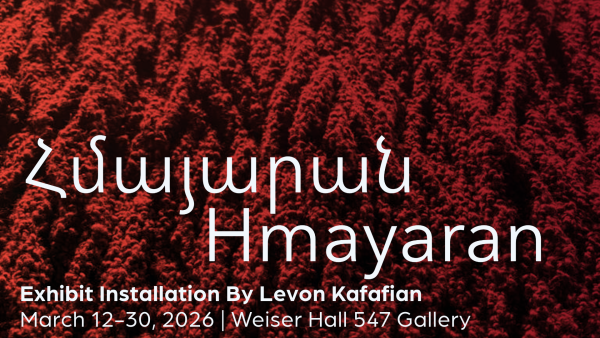

Exhibit Opening: March 12, 2026
Exhibit Dates: March 12-30, 2026, International Institute Gallery, 547 Weiser Hall
Set within Kafafian's speculative future world Azadistan—a place of magic and spirits beyond a digital collapse, Հմայարան / Hmayaran is an immersive shrine housing a series of soft-sculptural artifacts reimagining objects Armenians have traditionally crafted for spiritual power and protection.
Kafafian's focus in this exhibition is on the marks Armenians carve into stone, clay and wood to imbue meaning, memory and magic into their lived environments, particularly as part of folk traditions outside of the realms of church and state.
Channeled from the collective Armenian diasporic imaginary, Kafafian's Portal Fire series depicts a narrative story that emerges from the materials as they are brought into relationship through weaving, dyeing, embellishment and thread. In this story world hybrid cultural practices and alternative spiritual modes develop from embodied traditions in response to the changing physical and cultural landscape of Southwest Asia in a future where technological catastrophe has severed global communications and erased digital archives. The multi-ethnic society of Azadistan takes shape through installations, objects, texts and performances manifesting the multiplicity of Aremenian-ness through the dimensions of a complicated past and its potential for a vibrant, evolving futurity.
Cosponsor: Institute for the Humanities
Exhibit Dates: March 12-30, 2026, International Institute Gallery, 547 Weiser Hall
Set within Kafafian's speculative future world Azadistan—a place of magic and spirits beyond a digital collapse, Հմայարան / Hmayaran is an immersive shrine housing a series of soft-sculptural artifacts reimagining objects Armenians have traditionally crafted for spiritual power and protection.
Kafafian's focus in this exhibition is on the marks Armenians carve into stone, clay and wood to imbue meaning, memory and magic into their lived environments, particularly as part of folk traditions outside of the realms of church and state.
Channeled from the collective Armenian diasporic imaginary, Kafafian's Portal Fire series depicts a narrative story that emerges from the materials as they are brought into relationship through weaving, dyeing, embellishment and thread. In this story world hybrid cultural practices and alternative spiritual modes develop from embodied traditions in response to the changing physical and cultural landscape of Southwest Asia in a future where technological catastrophe has severed global communications and erased digital archives. The multi-ethnic society of Azadistan takes shape through installations, objects, texts and performances manifesting the multiplicity of Aremenian-ness through the dimensions of a complicated past and its potential for a vibrant, evolving futurity.
Cosponsor: Institute for the Humanities
Co-Sponsored By

Explore Similar Events
-
Loading Similar Events...
