Presented By: Nam Center for Korean Studies
Nam Center Colloquium Series | Reply 1997: K-Dramas and Conjunctural Analysis
Michelle Cho, University of Toronto

Please note: This lecture will be held in person and virtually on Zoom. The webinar is free and open to the public, but registration is required. Once you've registered, joining information will be sent to your email. Register for the Zoom webinar at: https://myumi.ch/JPJAe
South Korean serials (aka K-Dramas) are increasingly understood as a new paradigm of global media production on content streaming platforms. South Korean content industries have established a repertoire of narrative and character tropes that inventively combine multiple genres of popular storytelling, including zombie thrillers: All of Us Are Dead, Kingdom, Sweet Home; survival games: Physical 100, Hellbound; corporate/gangster noir: Vincenzo, Little Women; school bullying and revenge: The Glory, Extracurricular, Weak Hero; and romantic comedy: Crash Landing on You, Business Proposal, and many others. How did the Korean media ecosystem become so adept at anticipating globally resonant narratives and integrating local productions into the transnational infrastructures of new “television” consumption? This talk revisits the South Korean television series Reply 1997 (Ungtap hara 1997, tvN, 2012) as a crucial piece of the “K-content” puzzle, though it may seem at first glance to be an entirely different type of media object than the more recent streaming sensations mentioned above. Cho contends that the series and the broader cultural currents to which it gave form uniquely illuminate the transformative encounters, uneven entanglements, and overdetermined desires and aspirations that signify the “global” in “global media.” In this talk, she'll contextualize the show in the trajectory of Korean television’s increasingly platform-mediated mission to become a representative global media industry and popular narrative form, and analyze its novel approach to periodization. Cho will foreground the overdetermining impact of the late 1990s historical conjuncture to interpret the gesture of rewriting the memory of this period through the figure of the fangirl as an exemplary late-capitalist subject.
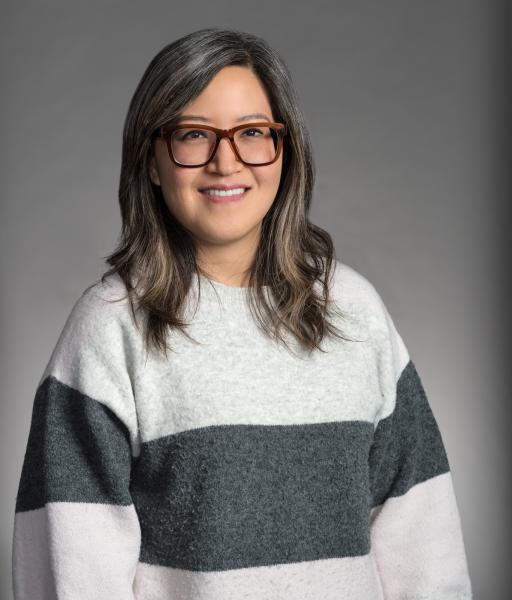
Michelle Cho is assistant professor of Korean Media and director of the Centre for the Study of Korea at the University of Toronto. Her work explores South Korean genre cinemas, Korean television, digital platforms, and mediations of race and gender in K-Pop and its fandoms. She is co-editor of Bangtan Remixed: A Critical BTS Reader and Mediating Gender in Post-Authoritarian South Korea and author of the forthcoming monograph Genre Worlds: Global Forms and Millennial South Korean Cinema. Her public-facing writing appears in such venues as The Los Angeles Review of Books, and she regularly contributes to the CBC’s daily culture show Commotion. She’s also a frequent commentator on Asian media in outlets ranging from NPR to CNN to The Washington Post.
Accommodation: If there is anything we can do to make this event accessible to you, please contact us at [email protected]. Please be aware that advance notice is necessary as some accommodations may require more time for the university to arrange.
South Korean serials (aka K-Dramas) are increasingly understood as a new paradigm of global media production on content streaming platforms. South Korean content industries have established a repertoire of narrative and character tropes that inventively combine multiple genres of popular storytelling, including zombie thrillers: All of Us Are Dead, Kingdom, Sweet Home; survival games: Physical 100, Hellbound; corporate/gangster noir: Vincenzo, Little Women; school bullying and revenge: The Glory, Extracurricular, Weak Hero; and romantic comedy: Crash Landing on You, Business Proposal, and many others. How did the Korean media ecosystem become so adept at anticipating globally resonant narratives and integrating local productions into the transnational infrastructures of new “television” consumption? This talk revisits the South Korean television series Reply 1997 (Ungtap hara 1997, tvN, 2012) as a crucial piece of the “K-content” puzzle, though it may seem at first glance to be an entirely different type of media object than the more recent streaming sensations mentioned above. Cho contends that the series and the broader cultural currents to which it gave form uniquely illuminate the transformative encounters, uneven entanglements, and overdetermined desires and aspirations that signify the “global” in “global media.” In this talk, she'll contextualize the show in the trajectory of Korean television’s increasingly platform-mediated mission to become a representative global media industry and popular narrative form, and analyze its novel approach to periodization. Cho will foreground the overdetermining impact of the late 1990s historical conjuncture to interpret the gesture of rewriting the memory of this period through the figure of the fangirl as an exemplary late-capitalist subject.
Michelle Cho is assistant professor of Korean Media and director of the Centre for the Study of Korea at the University of Toronto. Her work explores South Korean genre cinemas, Korean television, digital platforms, and mediations of race and gender in K-Pop and its fandoms. She is co-editor of Bangtan Remixed: A Critical BTS Reader and Mediating Gender in Post-Authoritarian South Korea and author of the forthcoming monograph Genre Worlds: Global Forms and Millennial South Korean Cinema. Her public-facing writing appears in such venues as The Los Angeles Review of Books, and she regularly contributes to the CBC’s daily culture show Commotion. She’s also a frequent commentator on Asian media in outlets ranging from NPR to CNN to The Washington Post.
Accommodation: If there is anything we can do to make this event accessible to you, please contact us at [email protected]. Please be aware that advance notice is necessary as some accommodations may require more time for the university to arrange.
Related Links
Co-Sponsored By

Explore Similar Events
-
Loading Similar Events...
