Presented By: Center for South Asian Studies
CSAS Annual Thomas R. Trautmann Honorary Lecture 2026 | India’s War on the Mughal Empire
Richard M. Eaton, University of Arizona

Please note: This lecture will be held in person and livestreamed on Zoom. The webinar is free and open to the public, but registration is required. Once you've registered, joining information will be sent to your email. Register for the Zoom webinar at: https://myumi.ch/Qw4dD. Note, this lecture will not be recorded and published at a later date.
Much has been written about the rise of Hindutva (Hindu-centric) ideology in contemporary India, especially since the rise of Narendra Modi to power as India’s Prime Minister twelve years ago. This paper will explore the historical dimension to this movement, and more particularly, the ways in which the current government has attempted to erase memory of India’s most glorious empire – the Mughals – from the historical record. This paper will explore several dimensions to this effort, including interventions in the school curricula, the manipulation of the memory of Mughal architecture, literary and linguistic tastes, the erasure of Mughal space as reflected in new place names, both implemented and proposed, and through Bollywood depictions of figures associated with the Mughal empire.
Lecture followed by reception at Forum hall, Palmer Commons 4th floor
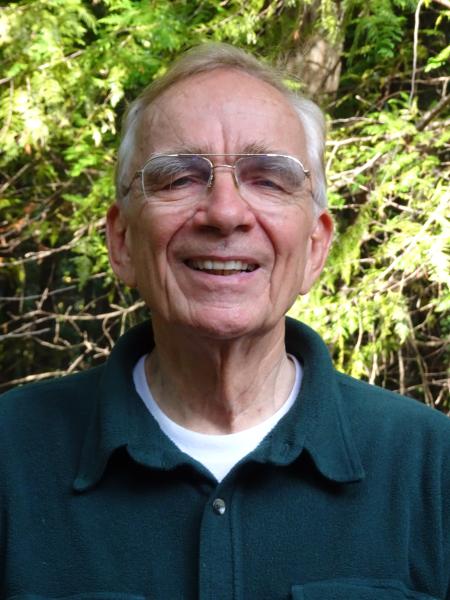
A graduate of the universities of Virginia and Wisconsin, Professor Eaton teaches South Asian history at the University of Arizona. His published works include Sufis of Bijapur(Princeton, 1978), The Rise of Islam and the Bengal Frontier, 1204-1760 (California, 1993), Essays on Islam and Indian History (Oxford, 2000), India's Islamic Traditions, 711-1750 (Oxford, 2002), Social History of the Deccan, 1300-1761: Eight Indian Lives (Cambridge, 2005), Slavery and South Asian History (co-edited with Indrani Chatterjee, Indiana, 2006), Power, Memory, Architecture: Contested Sites on India’s Deccan Plateau, 1300-1600 (co-authored with Phillip Wagoner, Oxford, 2014), India in the Persianate Age, 1000-1765 (Penguin Books, 2020), The Lotus and the Lion: Essays on India’s Sanskritic and Persianate Worlds (Primus Books, 2022), and The Oxford Handbook of the Mughal World (co-edited with Ramya Sreenivasan, Oxford, 2025).
Much has been written about the rise of Hindutva (Hindu-centric) ideology in contemporary India, especially since the rise of Narendra Modi to power as India’s Prime Minister twelve years ago. This paper will explore the historical dimension to this movement, and more particularly, the ways in which the current government has attempted to erase memory of India’s most glorious empire – the Mughals – from the historical record. This paper will explore several dimensions to this effort, including interventions in the school curricula, the manipulation of the memory of Mughal architecture, literary and linguistic tastes, the erasure of Mughal space as reflected in new place names, both implemented and proposed, and through Bollywood depictions of figures associated with the Mughal empire.
Lecture followed by reception at Forum hall, Palmer Commons 4th floor
A graduate of the universities of Virginia and Wisconsin, Professor Eaton teaches South Asian history at the University of Arizona. His published works include Sufis of Bijapur(Princeton, 1978), The Rise of Islam and the Bengal Frontier, 1204-1760 (California, 1993), Essays on Islam and Indian History (Oxford, 2000), India's Islamic Traditions, 711-1750 (Oxford, 2002), Social History of the Deccan, 1300-1761: Eight Indian Lives (Cambridge, 2005), Slavery and South Asian History (co-edited with Indrani Chatterjee, Indiana, 2006), Power, Memory, Architecture: Contested Sites on India’s Deccan Plateau, 1300-1600 (co-authored with Phillip Wagoner, Oxford, 2014), India in the Persianate Age, 1000-1765 (Penguin Books, 2020), The Lotus and the Lion: Essays on India’s Sanskritic and Persianate Worlds (Primus Books, 2022), and The Oxford Handbook of the Mughal World (co-edited with Ramya Sreenivasan, Oxford, 2025).
Related Links
Co-Sponsored By

Explore Similar Events
-
Loading Similar Events...
