Presented By: Asian Languages and Cultures
Fifth Annual Luis Gómez Memorial Lecture with Professor Jacob Dalton
A Tantric Feast on the Silk Road: Reconstructing a Tenth-Century Ganacakra at Dunhuang
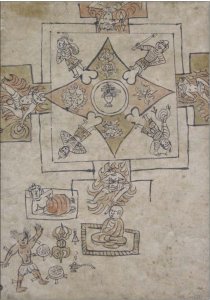

Discovered over a century ago, Mogao Cave 17 on the ancient Silk Road yielded a vast cache of Tibetan
manuscripts dating to the ninth and tenth centuries. Among them is the longest tantric Buddhist text
found at the site—a Tibetan manual detailing the performance of a tantric feast (gaṇacakra). This
communal ritual centers on transgressive practices: the consumption of impure sacramental substances,
sexual yogas, violent offerings, and other antinomian acts. Originating in India around the late eighth
century, the gaṇacakra became one of the most distinctive and secretive elements of tantric Buddhism.
The Dunhuang manuscript provides a rare early glimpse into how such a ritual was performed and
understood in practice. In this lecture, Dalton explores what this extraordinary text reveals about ritual
transgression, community formation, and the lived realities of tantric Buddhists on the early Silk Road.
manuscripts dating to the ninth and tenth centuries. Among them is the longest tantric Buddhist text
found at the site—a Tibetan manual detailing the performance of a tantric feast (gaṇacakra). This
communal ritual centers on transgressive practices: the consumption of impure sacramental substances,
sexual yogas, violent offerings, and other antinomian acts. Originating in India around the late eighth
century, the gaṇacakra became one of the most distinctive and secretive elements of tantric Buddhism.
The Dunhuang manuscript provides a rare early glimpse into how such a ritual was performed and
understood in practice. In this lecture, Dalton explores what this extraordinary text reveals about ritual
transgression, community formation, and the lived realities of tantric Buddhists on the early Silk Road.

Explore Similar Events
-
Loading Similar Events...
