Presented By: Department of Astronomy
The Department of Astronomy 2025-2026 Colloquium Series Presents:
Dr. Xavier Barcons, Director General, European Southern Observatory (ESO)
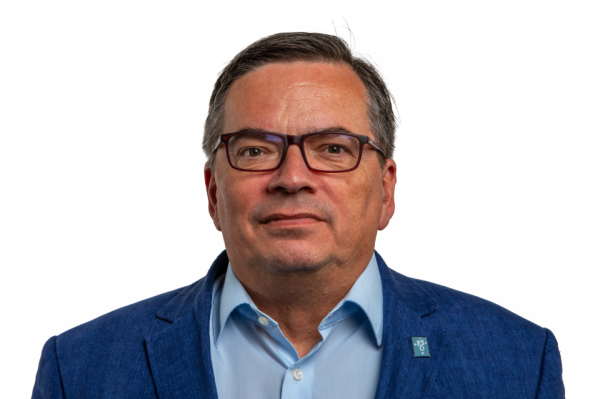

"ESO for astronomers: updates and opportunities"
Abstract: The European Southern Observatory is currently operating two world-class astronomical observatories: La Silla Paranal (optical/IR) and ALMA (sub/mm), the latter in partnership with North America and East Asia. Vigorous development programs for both observatories are being tackled in order to maintain their scientific competitiveness. ESO is also building the Extremely Large Telescope (ELT) which will be operated together with the VLT and VLTI in Paranal at the turn of the decade. In the next few years the first VHE Gamma-Ray observatory CTAO (Cherenkov Telescope Array Observatory), of which ESO is a founding partner, will start early science operations in the southern site, also as part of the Paranal site. With this portfolio, ESO has become a multi-program organization, with facilities across the wavelength spectrum, enabling many scientific breakthroughs. Moving forward, ESO has launched the Expanding Horizons process to identify a transformational facility for the 2040s which would become its next Program after the ELT. I will underline opportunities to both access science data from these facilities, as well as to collaborate in instrument development.
Abstract: The European Southern Observatory is currently operating two world-class astronomical observatories: La Silla Paranal (optical/IR) and ALMA (sub/mm), the latter in partnership with North America and East Asia. Vigorous development programs for both observatories are being tackled in order to maintain their scientific competitiveness. ESO is also building the Extremely Large Telescope (ELT) which will be operated together with the VLT and VLTI in Paranal at the turn of the decade. In the next few years the first VHE Gamma-Ray observatory CTAO (Cherenkov Telescope Array Observatory), of which ESO is a founding partner, will start early science operations in the southern site, also as part of the Paranal site. With this portfolio, ESO has become a multi-program organization, with facilities across the wavelength spectrum, enabling many scientific breakthroughs. Moving forward, ESO has launched the Expanding Horizons process to identify a transformational facility for the 2040s which would become its next Program after the ELT. I will underline opportunities to both access science data from these facilities, as well as to collaborate in instrument development.

Explore Similar Events
-
Loading Similar Events...
