Presented By: University of Michigan Biological Station
“The Tale of a Weevil”
Dr. Bénédicte Boisseron, University of Michigan
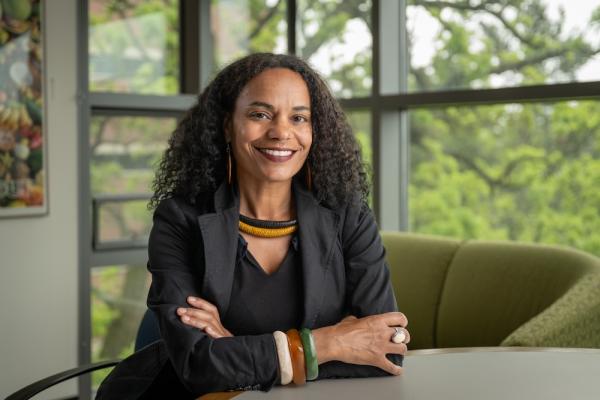

As part of the 2026 Summer Lecture Series at the University of Michigan Biological Station (UMBS), Dr. Bénédicte Boisseron will give a free, public talk titled, “The Tale of a Weevil.”
Boisseron is professor and chair of the Department of Afroamerican and African Studies at the University of Michigan and an affiliate faculty in Romances Languages and Literature, and Comparative Literature.
Her interdisciplinary scholarship bridges Global Black Studies and the Environmental Humanities through literary, historical, and artistic perspectives.
This talk will use a magnifying glass to examine an environmental crisis of epic proportions in the French Caribbean islands of Guadeloupe and Martinique.
From 1972 to 1993, a highly toxic pesticide was sprayed on weevil-infested banana plantations in the islands, despite known health risks, largely due to pressure from powerful white planter elites and the economic importance of the banana industry.
The resulting health impact on the population has come to symbolize how the colonial is often inextricable from the ecological. But what about the weevil?
This talk responds to environmental scholar Malcolm Ferdinand’s call to also look at the weevil in this dramatic story.
Boisseron is the author of “Creole Renegades: Rhetoric of Betrayal and Guilt in the Caribbean Diaspora” (2014) and “Afro-Dog: Blackness and the Animal Question” (2018).
Her current book project focuses on food repurposing and was supported by a Guggenheim Fellowship, alongside additional funding for her broader work on repurposing practices.
Her recent publications examine pesticide contamination on banana plantations in the French Antilles.
In Winter 2024, Boisseron taught Food Literacy for All as a faculty instructor and is a Sustainable Food Systems Initiative Affiliate.
The University of Michigan Biological Station serves as a gathering place to learn from the natural world, advance research and education, and inspire action. We leverage over a century of research and transformative experiences to drive discoveries and solutions to benefit Michigan and beyond.
Founded in 1909, UMBS supports long-term research and education through immersive, field-based courses and features state-of-the-art equipment and facilities for data collection and analysis to help any field researcher be productive. It is where students and scientists from across the globe live and work as a community to learn from the place.
The Summer Lecture Series is a tradition at UMBS, where we explore scientific topics with distinguished guest speakers from across the country so the community can learn about our natural world.
The free, public talks are on Wednesdays at 7 p.m. in the spring and summer in Gates Lecture Hall at the University of Michigan Biological Station, located at 9133 Biological Rd. in Pellston, Michigan — about 20 miles south of the Mackinac Bridge.
Boisseron is professor and chair of the Department of Afroamerican and African Studies at the University of Michigan and an affiliate faculty in Romances Languages and Literature, and Comparative Literature.
Her interdisciplinary scholarship bridges Global Black Studies and the Environmental Humanities through literary, historical, and artistic perspectives.
This talk will use a magnifying glass to examine an environmental crisis of epic proportions in the French Caribbean islands of Guadeloupe and Martinique.
From 1972 to 1993, a highly toxic pesticide was sprayed on weevil-infested banana plantations in the islands, despite known health risks, largely due to pressure from powerful white planter elites and the economic importance of the banana industry.
The resulting health impact on the population has come to symbolize how the colonial is often inextricable from the ecological. But what about the weevil?
This talk responds to environmental scholar Malcolm Ferdinand’s call to also look at the weevil in this dramatic story.
Boisseron is the author of “Creole Renegades: Rhetoric of Betrayal and Guilt in the Caribbean Diaspora” (2014) and “Afro-Dog: Blackness and the Animal Question” (2018).
Her current book project focuses on food repurposing and was supported by a Guggenheim Fellowship, alongside additional funding for her broader work on repurposing practices.
Her recent publications examine pesticide contamination on banana plantations in the French Antilles.
In Winter 2024, Boisseron taught Food Literacy for All as a faculty instructor and is a Sustainable Food Systems Initiative Affiliate.
The University of Michigan Biological Station serves as a gathering place to learn from the natural world, advance research and education, and inspire action. We leverage over a century of research and transformative experiences to drive discoveries and solutions to benefit Michigan and beyond.
Founded in 1909, UMBS supports long-term research and education through immersive, field-based courses and features state-of-the-art equipment and facilities for data collection and analysis to help any field researcher be productive. It is where students and scientists from across the globe live and work as a community to learn from the place.
The Summer Lecture Series is a tradition at UMBS, where we explore scientific topics with distinguished guest speakers from across the country so the community can learn about our natural world.
The free, public talks are on Wednesdays at 7 p.m. in the spring and summer in Gates Lecture Hall at the University of Michigan Biological Station, located at 9133 Biological Rd. in Pellston, Michigan — about 20 miles south of the Mackinac Bridge.
Related Links

Explore Similar Events
-
Loading Similar Events...
