Presented By: University of Michigan Biological Station
“Linking Pathogen Inactivation and Byproduct Formation: Nucleic Acid Fate During Drinking Water Disinfection”
Dr. Aleksandra Szczuka, University of Michigan
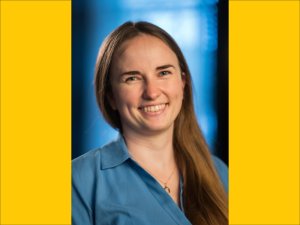

As part of the 2026 Summer Lecture Series at the University of Michigan Biological Station (UMBS), Dr. Aleksandra Szczuka will give a free, public talk about safe and sustainable drinking water and human health, titled “Linking Pathogen Inactivation and Byproduct Formation: Nucleic Acid Fate During Drinking Water Disinfection.”
Szczuka is an assistant professor of civil and environmental engineering at the University of Michigan whose research is motivated by broad access to affordable water.
Drinking water treatment plants — originally designed to treat relatively clean surface waters — are now faced with increasing levels of biological and chemical contaminants.
Chlorination is a key process for controlling acute health risks. However, disinfection byproducts (DBPs), which pose chronic health risks such as bladder cancer, form as an unintended consequence of chlorination.
Szczuka will examine nucleic acids as a missing link between pathogen control and byproduct formation. She also will discuss the roles of previously overlooked chlorine species in nucleic acid reactivity and viral inactivation, and the potential for nucleic acid chlorination to form an emerging class of DBPs.
Collaborating with practitioners, Szczuka will talk about how utilities in Michigan are working to meet both biological and chemical contaminant treatment objectives in a changing climate.
Her research uses fundamental chemistry and microbiology to inform treatment of non-traditional water sources to safeguard public health. Szczuka is especially interested in understanding the drivers of acute and chronic health risks in water and in advancing emerging treatment technologies.
She collaborates with researchers, engineers, and utility practitioners.
Szczuka received her Ph.D. and M.S. degrees in civil and environmental engineering from Stanford University, and a B.S.E. degree in chemical and biological engineering from Princeton University.
Prior to starting her lab, Alex was a Presidential Postdoctoral Fellow at the University of Michigan.
The University of Michigan Biological Station serves as a gathering place to learn from the natural world, advance research and education, and inspire action. We leverage over a century of research and transformative experiences to drive discoveries and solutions to benefit Michigan and beyond.
Founded in 1909, UMBS supports long-term research and education through immersive, field-based courses and features state-of-the-art equipment and facilities for data collection and analysis to help any field researcher be productive. It is where students and scientists from across the globe live and work as a community to learn from the place.
The Summer Lecture Series is a tradition at UMBS, where we explore scientific topics with distinguished guest speakers from across the country so the community can learn about our natural world.
The free, public talks are on Wednesdays at 7 p.m. in the spring and summer in Gates Lecture Hall at the University of Michigan Biological Station, located at 9133 Biological Rd. in Pellston, Michigan — about 20 miles south of the Mackinac Bridge.
Szczuka is an assistant professor of civil and environmental engineering at the University of Michigan whose research is motivated by broad access to affordable water.
Drinking water treatment plants — originally designed to treat relatively clean surface waters — are now faced with increasing levels of biological and chemical contaminants.
Chlorination is a key process for controlling acute health risks. However, disinfection byproducts (DBPs), which pose chronic health risks such as bladder cancer, form as an unintended consequence of chlorination.
Szczuka will examine nucleic acids as a missing link between pathogen control and byproduct formation. She also will discuss the roles of previously overlooked chlorine species in nucleic acid reactivity and viral inactivation, and the potential for nucleic acid chlorination to form an emerging class of DBPs.
Collaborating with practitioners, Szczuka will talk about how utilities in Michigan are working to meet both biological and chemical contaminant treatment objectives in a changing climate.
Her research uses fundamental chemistry and microbiology to inform treatment of non-traditional water sources to safeguard public health. Szczuka is especially interested in understanding the drivers of acute and chronic health risks in water and in advancing emerging treatment technologies.
She collaborates with researchers, engineers, and utility practitioners.
Szczuka received her Ph.D. and M.S. degrees in civil and environmental engineering from Stanford University, and a B.S.E. degree in chemical and biological engineering from Princeton University.
Prior to starting her lab, Alex was a Presidential Postdoctoral Fellow at the University of Michigan.
The University of Michigan Biological Station serves as a gathering place to learn from the natural world, advance research and education, and inspire action. We leverage over a century of research and transformative experiences to drive discoveries and solutions to benefit Michigan and beyond.
Founded in 1909, UMBS supports long-term research and education through immersive, field-based courses and features state-of-the-art equipment and facilities for data collection and analysis to help any field researcher be productive. It is where students and scientists from across the globe live and work as a community to learn from the place.
The Summer Lecture Series is a tradition at UMBS, where we explore scientific topics with distinguished guest speakers from across the country so the community can learn about our natural world.
The free, public talks are on Wednesdays at 7 p.m. in the spring and summer in Gates Lecture Hall at the University of Michigan Biological Station, located at 9133 Biological Rd. in Pellston, Michigan — about 20 miles south of the Mackinac Bridge.
Related Links

Explore Similar Events
-
Loading Similar Events...
