Presented By: University of Michigan Biological Station
Pettingill Lecture in Natural History: “Beavers: Architects of Climate Resilience”
Dr. Emily Fairfax, University of Minnesota
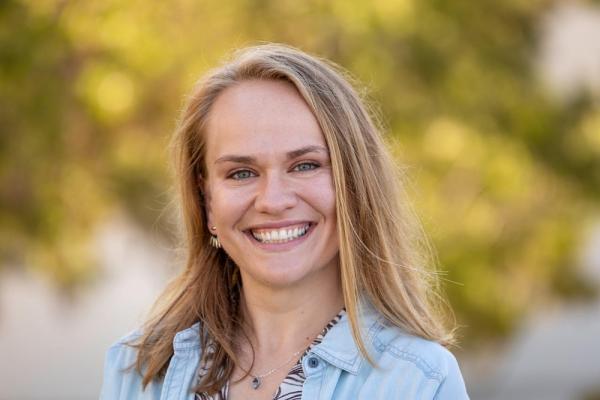

As part of the 2026 Summer Lecture Series at the University of Michigan Biological Station (UMBS), Dr. Emily Fairfax will give the Pettingill Lecture in Natural History. The free, public talk is titled “Beavers: Architects of Climate Resilience.”
Fairfax is an assistant professor of geography at the University of Minnesota and an affiliate faculty member at the Saint Anthony Falls Laboratory.
She uses a combination of remote sensing, modeling, and field work to understand how beaver ecosystem engineering can create drought and fire-resistant patches in the landscape under a changing climate.
Beaver dams and beaver mimicry (e.g. Beaver Dam Analogs) are gaining popularity as a low‐cost, nature-based strategy to build climate resiliency at the landscape scale.
Here in the Great Lakes Region, we are experiencing wetter winters, hotter and drier summers, flashier storms, and a longer frost-free season.
Beaver ecosystem engineering can help mitigate some of these impacts on local to watershed scales.
Beavers slow and store water in their ponds, canals, and the surrounding soil during flood periods which can then be accessed by riparian vegetation during droughts.
As a result, the well-watered vegetation in beaver-dammed riparian corridors is less flammable.
Fairfax’s research has shown that these beaver-influenced patches of the landscape stay green and can serve as climate refugia, preserving intact, mature riparian habitat, even during extreme drought and fire.
She suggests that perhaps instead of relying solely on human engineering and management to create and maintain healthy waterways and riparian zones, humans could benefit from partnering with beaver’s ecosystem engineering to achieve the same goals at a lower cost.
Fairfax double majored in chemistry and physics as an undergraduate at Carleton College, then went on to earn a Ph.D. in geological sciences with an emphasis in hydrologic sciences from the University of Colorado Boulder.
Her research has been featured internationally in National Geographic, the New York Times, the LA Times, PBS, NPR, BBC, and others. When Fairfax says she can talk about beavers all day, she’s not kidding.
The University of Michigan Biological Station serves as a gathering place to learn from the natural world, advance research and education, and inspire action. We leverage over a century of research and transformative experiences to drive discoveries and solutions to benefit Michigan and beyond.
Founded in 1909, UMBS supports long-term research and education through immersive, field-based courses and features state-of-the-art equipment and facilities for data collection and analysis to help any field researcher be productive. It is where students and scientists from across the globe live and work as a community to learn from the place.
The Summer Lecture Series is a tradition at UMBS, where we explore scientific topics with distinguished guest speakers from across the country so the community can learn about our natural world.
The free, public talks are on Wednesdays at 7 p.m. in the spring and summer in Gates Lecture Hall at the University of Michigan Biological Station, located at 9133 Biological Rd. in Pellston, Michigan — about 20 miles south of the Mackinac Bridge.
Fairfax is an assistant professor of geography at the University of Minnesota and an affiliate faculty member at the Saint Anthony Falls Laboratory.
She uses a combination of remote sensing, modeling, and field work to understand how beaver ecosystem engineering can create drought and fire-resistant patches in the landscape under a changing climate.
Beaver dams and beaver mimicry (e.g. Beaver Dam Analogs) are gaining popularity as a low‐cost, nature-based strategy to build climate resiliency at the landscape scale.
Here in the Great Lakes Region, we are experiencing wetter winters, hotter and drier summers, flashier storms, and a longer frost-free season.
Beaver ecosystem engineering can help mitigate some of these impacts on local to watershed scales.
Beavers slow and store water in their ponds, canals, and the surrounding soil during flood periods which can then be accessed by riparian vegetation during droughts.
As a result, the well-watered vegetation in beaver-dammed riparian corridors is less flammable.
Fairfax’s research has shown that these beaver-influenced patches of the landscape stay green and can serve as climate refugia, preserving intact, mature riparian habitat, even during extreme drought and fire.
She suggests that perhaps instead of relying solely on human engineering and management to create and maintain healthy waterways and riparian zones, humans could benefit from partnering with beaver’s ecosystem engineering to achieve the same goals at a lower cost.
Fairfax double majored in chemistry and physics as an undergraduate at Carleton College, then went on to earn a Ph.D. in geological sciences with an emphasis in hydrologic sciences from the University of Colorado Boulder.
Her research has been featured internationally in National Geographic, the New York Times, the LA Times, PBS, NPR, BBC, and others. When Fairfax says she can talk about beavers all day, she’s not kidding.
The University of Michigan Biological Station serves as a gathering place to learn from the natural world, advance research and education, and inspire action. We leverage over a century of research and transformative experiences to drive discoveries and solutions to benefit Michigan and beyond.
Founded in 1909, UMBS supports long-term research and education through immersive, field-based courses and features state-of-the-art equipment and facilities for data collection and analysis to help any field researcher be productive. It is where students and scientists from across the globe live and work as a community to learn from the place.
The Summer Lecture Series is a tradition at UMBS, where we explore scientific topics with distinguished guest speakers from across the country so the community can learn about our natural world.
The free, public talks are on Wednesdays at 7 p.m. in the spring and summer in Gates Lecture Hall at the University of Michigan Biological Station, located at 9133 Biological Rd. in Pellston, Michigan — about 20 miles south of the Mackinac Bridge.
Related Links

Explore Similar Events
-
Loading Similar Events...
