Presented By: Weiser Center for Europe and Eurasia
Teresa Poggi Lecture on Italy and the Mediterranean World. “Signor Presidente:" Giorgia Meloni and the Italian Laboratory
Rachel Donadio, contributing writer at The Atlantic, former The New York Times Rome Bureau Chief and European Culture Correspondent

In 2022, Prime Minister Giorgia Meloni became the first far-right leader of Italy since Fascism and the first woman to ever lead the country. Four years later, Meloni has proven resilient, despite challenging economic indicators and after losing a referendum to limit the independence of the judiciary. A skillful politician, Meloni has deftly navigated between Italy’s commitments to the European Union and the country’s longtime strategic alliance with the United States, even as the Trump Administration has pushed to scale back NATO in Europe, causing confusion and distress in Europe’s halls of power.
From Fascism to the personality-driven phenomenon of Silvio Berlusconi to the anti-system Five Star Movement, Italy has always been a political laboratory, a harbinger of political trends to come. With this lens, what larger lessons can we draw from Meloni’s leadership about the direction of Italy and Europe? Has Meloni normalized the far right or transformed it into a mainstream conservative movement? What are her most concrete accomplishments? As a study in power, what do we make of this small, blonde, fierce woman who insists on using the masculine form of address, “Signor Presidente”?
The annual Teresa Poggi Lecture on Italy and the Mediterranean World focuses on contemporary and historical issues related to the region. It is made possible by a generous gift from Stephanie and Sue Augustyniak in honor of their mother.
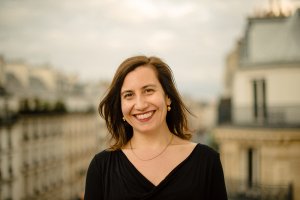
Rachel Donadio is a Paris-based writer, a contributing writer for The Atlantic, and a former Rome Bureau Chief and European Culture Correspondent for The New York Times. She regularly publishes textured profiles and features at the intersection of culture and politics, as well as literary criticism, and is a frequent contributor to The New York Review of Books. Donadio has reported from more than two dozen countries and interviewed heads of state and major cultural figures, including four Nobel Laureates in literature.
In her many years covering Italy, she has written on Giorgia Meloni’s culture wars, Curzio Malaparte, Nicola Gratteri when he was a leading Italian anti-Mafia prosecutor, former Prime Minister Silvio Berlusconi, Gina Lollobrigida, Paolo Sorrentino, a rare book theft in Naples, why Italians gesticulate, Amalfi lemons, a family of centenarians in Sardinia, a Bangladeshi Cricket league in Rome, and the first non-Italian director of the Uffizi. She has also covered the Vatican and led The New York Times coverage of the conclave in which Pope Francis was elected.
If there is anything we can do to make this event accessible to you, please contact [email protected]. Please be aware that advance notice is necessary as some accommodations may require more time for the university to arrange.
Part of the International Institute Theme Year: Sovereignty
https://myumi.ch/ii-theme
From Fascism to the personality-driven phenomenon of Silvio Berlusconi to the anti-system Five Star Movement, Italy has always been a political laboratory, a harbinger of political trends to come. With this lens, what larger lessons can we draw from Meloni’s leadership about the direction of Italy and Europe? Has Meloni normalized the far right or transformed it into a mainstream conservative movement? What are her most concrete accomplishments? As a study in power, what do we make of this small, blonde, fierce woman who insists on using the masculine form of address, “Signor Presidente”?
The annual Teresa Poggi Lecture on Italy and the Mediterranean World focuses on contemporary and historical issues related to the region. It is made possible by a generous gift from Stephanie and Sue Augustyniak in honor of their mother.
Rachel Donadio is a Paris-based writer, a contributing writer for The Atlantic, and a former Rome Bureau Chief and European Culture Correspondent for The New York Times. She regularly publishes textured profiles and features at the intersection of culture and politics, as well as literary criticism, and is a frequent contributor to The New York Review of Books. Donadio has reported from more than two dozen countries and interviewed heads of state and major cultural figures, including four Nobel Laureates in literature.
In her many years covering Italy, she has written on Giorgia Meloni’s culture wars, Curzio Malaparte, Nicola Gratteri when he was a leading Italian anti-Mafia prosecutor, former Prime Minister Silvio Berlusconi, Gina Lollobrigida, Paolo Sorrentino, a rare book theft in Naples, why Italians gesticulate, Amalfi lemons, a family of centenarians in Sardinia, a Bangladeshi Cricket league in Rome, and the first non-Italian director of the Uffizi. She has also covered the Vatican and led The New York Times coverage of the conclave in which Pope Francis was elected.
If there is anything we can do to make this event accessible to you, please contact [email protected]. Please be aware that advance notice is necessary as some accommodations may require more time for the university to arrange.
Part of the International Institute Theme Year: Sovereignty
https://myumi.ch/ii-theme
Co-Sponsored By

Explore Similar Events
-
Loading Similar Events...
