Presented By: Lieberthal-Rogel Center for Chinese Studies
LRCCS Noon Lecture Series | Art in Warring States China (5th-3rd Century BC): Thinking Like a Designer
Haicheng Wang, University of Washington

Please note: This lecture will be held in person and virtually on Zoom. If you would like to attend via Zoom, registration is required. Once you've registered, joining information will be sent to your email. Register for the Zoom webinar at: https://myumi.ch/e7gRJ
New developments in the lacquer and silk workshops posed significant challenges to other medium, causing a complete change of aesthetic during the Warring States period (5th-3rd century BC). Moreover, because fine examples of lacquer and silk have actually survived from that time, we can see what other materials copied from them. But the only reason we can recognize borrowings is that each material has a character of its own. The lecture will explore this two-sided phenomenon—the individual character of each workshop tradition and the exchanges between workshops—by looking at inlaid bronzes, mirrors, jades, lacquers, and silks, using the problem of designing for a circular space as a case study to infer the thinking of designers working in each medium.
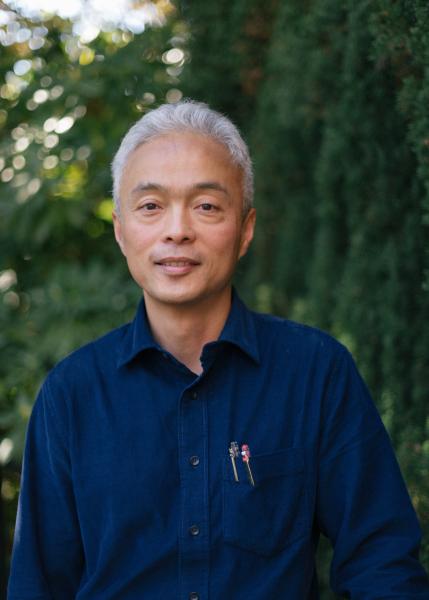
Wang Haicheng is Mary and Cheney Cowles Endowed Professor of Chinese art at the University of Washington, Seattle. His research interest focuses on the comparative study of the art and archaeology of early China. Recent publications include Art and Artistic Thinking in Ancient China (co-authored with Robert Bagley, 2025) and a chapter on ancient states and the rise of writing in The Oxford Handbook of Archaeology & Language (2025).
If there is anything we can do to make this event accessible to you, please contact us. Please be aware that advance notice is necessary as some accommodations may require more time for the university to arrange.
New developments in the lacquer and silk workshops posed significant challenges to other medium, causing a complete change of aesthetic during the Warring States period (5th-3rd century BC). Moreover, because fine examples of lacquer and silk have actually survived from that time, we can see what other materials copied from them. But the only reason we can recognize borrowings is that each material has a character of its own. The lecture will explore this two-sided phenomenon—the individual character of each workshop tradition and the exchanges between workshops—by looking at inlaid bronzes, mirrors, jades, lacquers, and silks, using the problem of designing for a circular space as a case study to infer the thinking of designers working in each medium.
Wang Haicheng is Mary and Cheney Cowles Endowed Professor of Chinese art at the University of Washington, Seattle. His research interest focuses on the comparative study of the art and archaeology of early China. Recent publications include Art and Artistic Thinking in Ancient China (co-authored with Robert Bagley, 2025) and a chapter on ancient states and the rise of writing in The Oxford Handbook of Archaeology & Language (2025).
If there is anything we can do to make this event accessible to you, please contact us. Please be aware that advance notice is necessary as some accommodations may require more time for the university to arrange.
Related Links
Co-Sponsored By

Explore Similar Events
-
Loading Similar Events...
