Presented By: Nuclear Engineering & Radiological Sciences
NERS Colloquium: Radiation Signatures, Passive Safeguards, and Advanced Nuclear Systems
Robert Hayes, North Carolina State University, Department of Nuclear Engineering
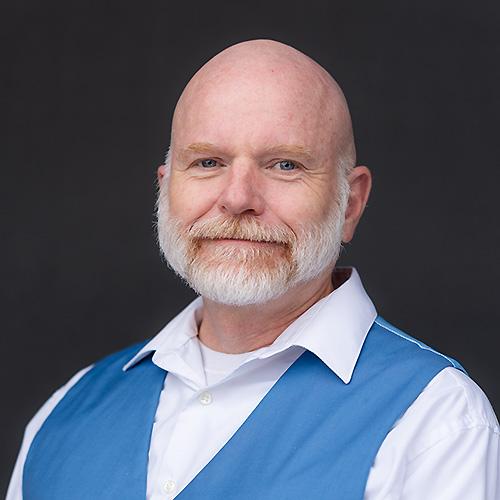

Bio: Dr. Robert B. Hayes is an Associate Professor of Nuclear Engineering at North Carolina State University, where he directs both the Health Physics minor and graduate certificate programs. He holds a joint faculty appointment in the Global Security Division at Savannah River National Laboratory and serves as an Associate Editor for Radiation Physics and Chemistry. A Certified Health Physicist, licensed Professional Engineer in Nuclear Engineering, Fellow of the Health Physics Society, and Fellow of the American Physical Society, Dr. Hayes brings a rare combination of university research, national laboratory service, industrial nuclear operations, emergency response, and public communication experience.
Before joining NC State, Dr. Hayes held senior technical and management roles across the nuclear enterprise, including work at the Waste Isolation Pilot Plant and the Remote Sensing Laboratory at Nellis Air Force Base. His industrial experience includes radiological engineering, nuclear waste operations, radiological technology development, emergency response, technical project management, and applied nuclear security work. This background gives his research and teaching a strong connection to real-world nuclear systems, regulatory constraints, field operations, and mission-driven engineering.
His research spans advanced reactor concepts, radiation shielding, radiological air monitoring, retrospective dosimetry, nuclear forensics, nonproliferation, emergency response, and radiation protection. He has worked extensively with thermoluminescence, optically stimulated luminescence, and electron paramagnetic resonance to reconstruct historical radiation fields from ordinary materials. He also serves on the DOE-NNSA Advisory Committee on Nuclear Security and the NCEES Nuclear Engineering PE exam committee.
Beyond the laboratory, classroom, and field, Dr. Hayes is an active public communicator on nuclear science and radiological risk, using social media to reach broad audiences and challenge misinformation about nuclear technology. His seminar will connect reactor physics, safeguards, forensics, shielding, industrial nuclear practice, emergency response, and public trust into a single message: radiation is not only something to be controlled, but also something that can be measured, interpreted, and used to build safer and more resilient nuclear systems.
Abstract: This seminar presents a connected research program in nuclear engineering centered on using radiation not only as a hazard to be controlled, but also as a source of information. The talk will begin with advanced reactor concepts based on natural uranium, beryllium moderation, light-water cooling, high burnup potential, and passive safeguard features. These concepts motivate broader questions about neutron economy, fuel-cycle design, nonproliferation, and how safeguards can be incorporated directly into reactor design.
The second part will focus on retrospective radiation characterization using thermoluminescence, optically stimulated luminescence, and electron paramagnetic resonance. These methods can turn ordinary materials such as brick, ceramics, surface-mount resistors, insulators, and building materials into passive records of prior radiation fields, enabling reconstruction of historical source locations, radiation energies, enrichment histories, and illicit nuclear activities after the source has been removed.
The final technical portion will address radiation shielding for space and terrestrial nuclear applications, including metal-oxide-infused conformal coatings, oxide-based shielding materials, neutron activation analysis, and buildup-factor methods. These approaches support improved protection of electronics, reduced activation concerns, and shielding optimization by mass, cost, and performance. If time permits, the seminar will close with a discussion of nuclear science communication on social media and how public-facing outreach can reduce radiological fear, counter misinformation, and broaden engagement with nuclear engineering.
The NERS Colloquia Series invites leading researchers, industry experts, and thought leaders from across the nuclear engineering and radiological sciences community to share their insights with students, faculty, and guests. Covering a wide range of topics—from cutting-edge research and emerging technologies to policy, education, and professional development—the weekly talks offer an opportunity to explore current issues and innovations shaping the future of the field.

Explore Similar Events
-
Loading Similar Events...
