Presented By: Nuclear Engineering & Radiological Sciences
NERS Colloquium: Spectroscopy for Nuclear Material Characterization, Plasma Science
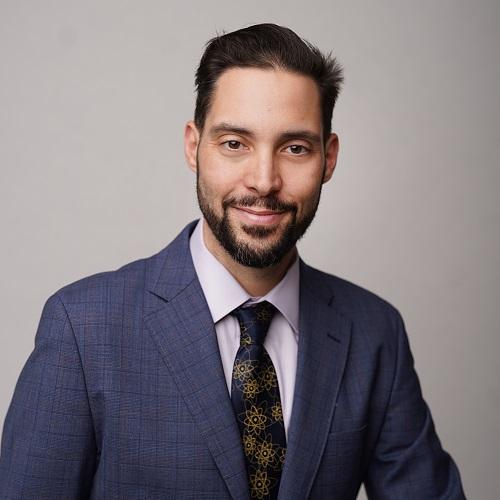
Alexander Bataller, North Carolina State University, Department of Nuclear Engineering

Abstract:
How do you measure what is happening inside liquids that are red-hot, highly reactive, and embedded in intense radiation fields while serving as coolants in advanced nuclear reactors? Over the past six years, my research group has been addressing this challenge by using light, through optical and plasma-based spectroscopy, to study molten salts and liquid metals relevant to advanced reactors, pyroprocessing, and safeguards. In this talk, I will give a big-picture overview of our work, from capturing the chaotic dance of microspheres, to witnessing the life and death of liberated electrons, to blowing plasma bubbles in liquids for applications in advanced nuclear systems. Together, these efforts show how optical access to high-temperature reactor liquids can reduce uncertainty in modeling, enable new sensing capabilities, and support the deployment of next-generation nuclear energy systems.
Bio:
Alexander Bataller is an Assistant Professor in the Department of Nuclear Engineering at North Carolina State University. His research focuses on applying optical and plasma-based spectroscopy to the characterization, fundamental science, and sensing of high-temperature liquids relevant to advanced nuclear systems, including molten salt reactors, pyroprocessing, and liquid metal technologies. His group develops non-intrusive diagnostics to measure thermophysical properties, probe ultrafast chemical processes in extreme environments, and enable real-time monitoring for reactor operation and safeguards. Dr. Bataller’s work spans benchtop experiments to loopintegrated demonstrations and is supported by DOE Nuclear Energy programs in collaboration with national laboratories and industry partners.
The NERS Colloquia Series invites leading researchers, industry experts, and thought leaders from across the nuclear engineering and radiological sciences community to share their insights with students, faculty, and guests. Covering a wide range of topics—from cutting-edge research and emerging technologies to policy, education, and professional development—the weekly talks offer an opportunity to explore current issues and innovations shaping the future of the field.
Explore Similar Events
-
Loading Similar Events...
