Presented By: Center for Russian, East European, and Eurasian Studies
CREES Noon Lecture. When Everyday Life Becomes an Event: Mobility in the Georgia-Abkhazia Conflict Zone
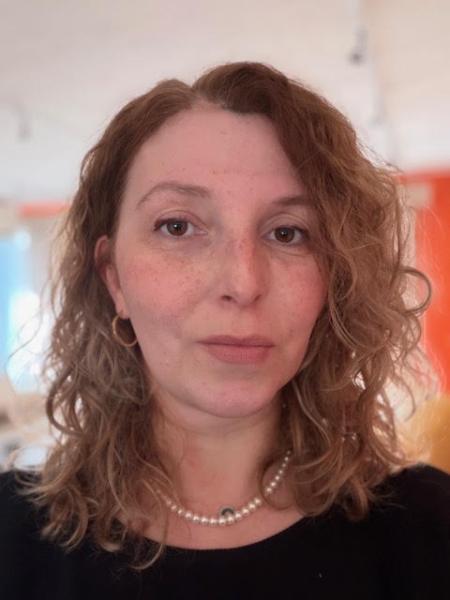
Görkem Aydemir-Kundakci, Fonds Wetenschappelijk Onderzoek (FWO) Postdoctoral Fellow in Anthropology, Katholieke Universiteit Leuven, Belgium

What does it take to sustain an ordinary life in a place shaped by decades of unresolved conflict and political uncertainty? Drawing on long-term ethnographic research in the de facto Georgia-Abkhazia borderland, this talk examines how displaced Georgians with constructed lives across an unrecognized but highly militarized border learn to navigate a landscape in which mobility is continually subject to political, material, and documentary contingencies. Rather than approaching protracted conflict primarily through rupture, destruction, or spectacular violence, Aydemir-Kundakci focuses on everyday eventfulness: how ordinary journeys to attend a wedding, shop, visit family, or go to a hospital can unexpectedly become consequential—when rising waters turn a familiar river crossing into a life-threatening swim, a document check evolves into harassment or extortion, or a passport stamp creates the risk of punishment on the other side.
Aydemir-Kundakci develops the concept of manageable eventfulness to describe the practical and anticipatory work through which people seek not necessarily to eliminate such contingencies altogether, but to keep their consequences within manageable limits. Following these practices across changing border regimes, landscapes, documents, and generations, she shows how people continually recalibrate their movements and anticipations as they strive for uneventful, ordinary lives amid prolonged conflict.
Dr. Görkem Aydemir-Kundakci is an FWO Postdoctoral Fellow in Anthropology at KU Leuven. Her research examines long-term displacement, conflict, mobility, environmental change, and precarity in Georgia’s de facto borderland with Abkhazia. She holds a PhD in Anthropology from George Washington University and held a postdoctoral fellowship at the University of Calgary. Her writing has appeared in journals such as the Journal of Refugee Studies, History and Anthropology, and Anthropology News. Aydemir-Kundakci’s research has been funded by the National Science Foundation (NSF), American Council of Learned Societies (ACLS), and Research Foundation Flanders (FWO).
Please note this event will be held virtually on Zoom. Please register at this link: https://myumi.ch/mVV9g
If there is anything we can do to make this event accessible to you, please contact us at [email protected]. Please be aware that advance notice is necessary as some accommodations may require more time for the university to arrange.
Part of the International Institute Theme Year: Sovereignty
https://myumi.ch/ii-theme
Aydemir-Kundakci develops the concept of manageable eventfulness to describe the practical and anticipatory work through which people seek not necessarily to eliminate such contingencies altogether, but to keep their consequences within manageable limits. Following these practices across changing border regimes, landscapes, documents, and generations, she shows how people continually recalibrate their movements and anticipations as they strive for uneventful, ordinary lives amid prolonged conflict.
Dr. Görkem Aydemir-Kundakci is an FWO Postdoctoral Fellow in Anthropology at KU Leuven. Her research examines long-term displacement, conflict, mobility, environmental change, and precarity in Georgia’s de facto borderland with Abkhazia. She holds a PhD in Anthropology from George Washington University and held a postdoctoral fellowship at the University of Calgary. Her writing has appeared in journals such as the Journal of Refugee Studies, History and Anthropology, and Anthropology News. Aydemir-Kundakci’s research has been funded by the National Science Foundation (NSF), American Council of Learned Societies (ACLS), and Research Foundation Flanders (FWO).
Please note this event will be held virtually on Zoom. Please register at this link: https://myumi.ch/mVV9g
If there is anything we can do to make this event accessible to you, please contact us at [email protected]. Please be aware that advance notice is necessary as some accommodations may require more time for the university to arrange.
Part of the International Institute Theme Year: Sovereignty
https://myumi.ch/ii-theme

Livestream Information
LivestreamOctober 7, 2026 (Wednesday) 12:00pm
Joining Information Not Yet Available
Explore Similar Events
-
Loading Similar Events...
