Presented By: Center for Middle Eastern and North African Studies
CMENAS 2026 Fall Colloquium Series | Chokepoints: Temporalities of Navigation in the Red Sea
Jatin Dua, University of Michigan

The story of shipping and of global trade is often narrated as one of ever-increasing efficiency and speed, of transitions from sail to steam to cargo and futures of automation—of making straight lines. But, for as long as there has been trade (and ships) there have been delays and interruptions—rerouters and rerouting. I argue that disruptions and moments when things appear to be stuck or rerouted are neither aberrations nor failures. Rerouting, far from being an exception, is both the norm and, at times, such as this contemporary moment of wars, sanctions, and tariffs, is a condition desired by many as a mode of profit and possibility.
To showcase the productive possibilities of rerouting, I focus on one sea route—the Bab-el-Mandeb, a key chokepoint for global trade connecting Europe to Asia and the Red Sea to the Indian Ocean. In 2023, in response to Houthi attacks on merchant ships, this shipping route briefly disappeared, as cargo ships were rerouted through the Cape of Good Hope. I tell this story of this rerouting and its consequences both ephemeral and long-lasting from the perspective of a mobile set of actors in the Red Sea. Locating them within longer histories and wider geographies, I argue for the centrality of interruptions within our understandings of circulation and crossings in the Indian Ocean and beyond.
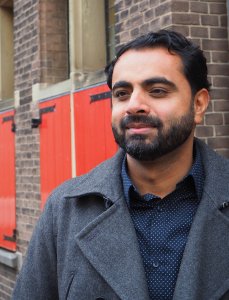
Jatin Dua is an associate professor of anthropology at the University of Michigan (U-M). He also directs the Oceans Lab at U-M, dedicated to collaborative and multimodal ways of engaging oceans as anthropological interlocutors. His research explores maritime mobility, and its perils and possibilities, in the Indian Ocean, focusing on processes and projects of governance, law, and economy. His book, Captured at Sea: Piracy and Protection in the Indian Ocean, published with the University of California Press (December 2019) [winner of the 2020 Elliot P. Skinner Book Award; shortlisted for the 2024 Monsoon Book Prize and translated into Italian and Greek] is a multi-sited ethnographic and archival engagement with Somali piracy and contestations over legitimate and illegitimate commerce in the Western Indian Ocean. In addition, he has published several articles on maritime anthropology, captivity, political economy, and sovereignty in Public Culture, American Ethnologist, Cultural Anthropology, Ethnos, Annual Review of Anthropology, History and Anthropology and Comparative Studies in Society and History. He is currently the editor-in-chief of Comparative Studies in Society and History.
RSVP: https://myumi.ch/PbbAb
If there is anything we can do to make this event accessible to you, please contact us. Please be aware that advance notice is necessary as some accommodations may require more time for the university to arrange. Contact: [email protected]
To showcase the productive possibilities of rerouting, I focus on one sea route—the Bab-el-Mandeb, a key chokepoint for global trade connecting Europe to Asia and the Red Sea to the Indian Ocean. In 2023, in response to Houthi attacks on merchant ships, this shipping route briefly disappeared, as cargo ships were rerouted through the Cape of Good Hope. I tell this story of this rerouting and its consequences both ephemeral and long-lasting from the perspective of a mobile set of actors in the Red Sea. Locating them within longer histories and wider geographies, I argue for the centrality of interruptions within our understandings of circulation and crossings in the Indian Ocean and beyond.
Jatin Dua is an associate professor of anthropology at the University of Michigan (U-M). He also directs the Oceans Lab at U-M, dedicated to collaborative and multimodal ways of engaging oceans as anthropological interlocutors. His research explores maritime mobility, and its perils and possibilities, in the Indian Ocean, focusing on processes and projects of governance, law, and economy. His book, Captured at Sea: Piracy and Protection in the Indian Ocean, published with the University of California Press (December 2019) [winner of the 2020 Elliot P. Skinner Book Award; shortlisted for the 2024 Monsoon Book Prize and translated into Italian and Greek] is a multi-sited ethnographic and archival engagement with Somali piracy and contestations over legitimate and illegitimate commerce in the Western Indian Ocean. In addition, he has published several articles on maritime anthropology, captivity, political economy, and sovereignty in Public Culture, American Ethnologist, Cultural Anthropology, Ethnos, Annual Review of Anthropology, History and Anthropology and Comparative Studies in Society and History. He is currently the editor-in-chief of Comparative Studies in Society and History.
RSVP: https://myumi.ch/PbbAb
If there is anything we can do to make this event accessible to you, please contact us. Please be aware that advance notice is necessary as some accommodations may require more time for the university to arrange. Contact: [email protected]
Related Links
Co-Sponsored By

Explore Similar Events
-
Loading Similar Events...
