Presented By: Earth and Environmental Sciences
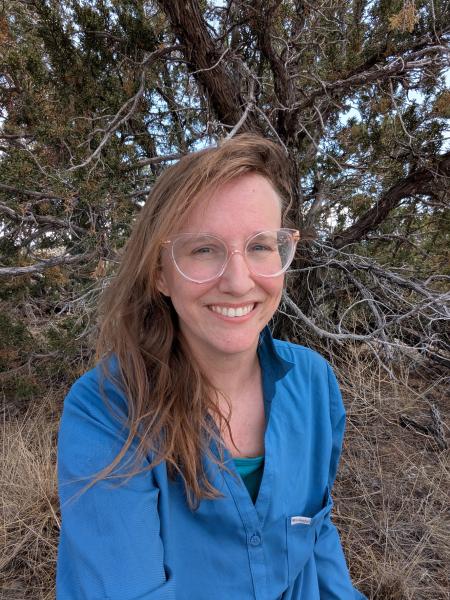
Smith Lecture: Emily Stewart
Lithospheres and atmospheres on Earth and beyond: how metamorphism links planetary interiors with (un)inhabitable environments

Geologic volatile cycling is fundamental to the past and future habitability of our planet. The elements carbon and sulfur in particular play essential roles in the regulation of global surface temperature. Carbon in the form of CO2 acts as a greenhouse gas, insulating and warming the planet, while sulfur in the form of aerosols (e.g., SO2) contributes to cloud formation and global cooling. Geologic processes control and moderate global climate on long timescales (millions of years); yet, on shorter timescales (tens of thousands of years), solid Earth carbon and/or sulfur release may drive environmental catastrophe and mass extinction We will explore a few aspects of this cycle from the perspective of a metamorphic petrologist. Rock metamorphism is an often-neglected part of the geologic volatile cycling, but I will argue that it may be of paramount importance to our planetary habitability. Drawing examples from Ancient mountain-building and Mesozoic mass extinction, an observation-driven approach is used to quantify some of these interactions. Finally, we will explore volatile cycling at coronae on Venus and consider implications for the evolution of its deep mantle and surface environment.

Explore Similar Events
-
Loading Similar Events...
