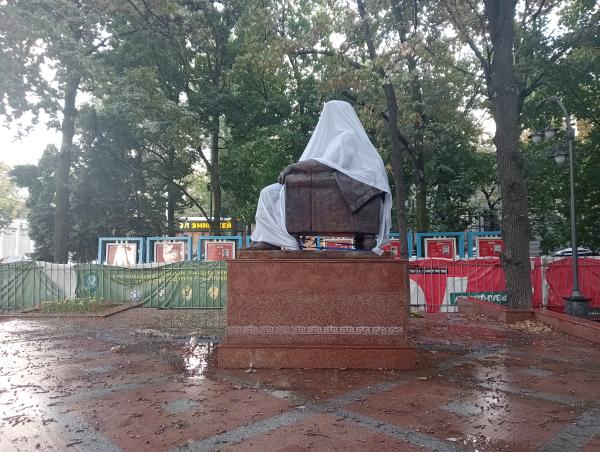

How has and does memory – familial, national, or imperial – impact understandings of the Centra Eurasia’s past by defining, changing, and erasing topics of investigation? How does memory – through recollections, reminisces, and retellings – shift, change, and morph through different historical periods and conjunctures? How might we consider “the sites of memory” – be they shrines, museums, gallery spaces – as enacting a shaping function onto the minds and memories of their visitors? How does the memory of events – of the Qing conquest of the Dzungars, of the Andijan uprising of 1898, of Tajikistan’s Civil War – prove capable creating, defining, and delineating group identities?
This workshop, presented by the U-M Department of History and the Central Eurasian Studies Society, will be held on October 19-20, 2026. Graduate students and early career scholars (PhD conferred in the last 5 years) will share their works-in-progress to receive critical feedback.
Thank you to our sponsors: Center for Russian, East European, & Eurasian Studies, Department of History, Eisenberg Institute for Historical Studies, Global Islamic Studies Center, Humanities Institute, Lieberthal-Rogel Center for Chinese Studies, LSA Graduate Student Funding, Weiser Center for Europe and Eurasia
This workshop, presented by the U-M Department of History and the Central Eurasian Studies Society, will be held on October 19-20, 2026. Graduate students and early career scholars (PhD conferred in the last 5 years) will share their works-in-progress to receive critical feedback.
Thank you to our sponsors: Center for Russian, East European, & Eurasian Studies, Department of History, Eisenberg Institute for Historical Studies, Global Islamic Studies Center, Humanities Institute, Lieberthal-Rogel Center for Chinese Studies, LSA Graduate Student Funding, Weiser Center for Europe and Eurasia

Explore Similar Events
-
Loading Similar Events...
