Presented By: Biomedical Engineering
Alan J. Hunt Memorial Lecture-U-M Biomedical Engineering
"Physical principles of cardiac sarcomere organization in health and disease," featuring Alex Dunn, Ph.D.
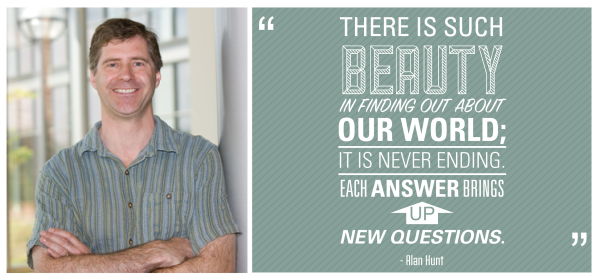

2026 Alan J. Hunt Memorial Lecture
Physical principles of cardiac sarcomere organization in health and disease
Abstract:
The remarkable capabilities of living tissues reflect the self-assembly of biological macromolecules into structures far larger and more complex than their individual components. The Dunn laboratory seeks to understand the physical principles that allow molecular interactions to produce organized, functional tissues. In this talk, I will focus on cardiomyocytes, whose contractile machinery provides a striking example of biological self-assembly. Using single-molecule force spectroscopy, we find that α-actinin-2, a core component of the sarcomeric Z-disc, binds actin in a strongly force- and direction-dependent manner. This behavior suggests a mechanism by which forces generated during contraction can help organize and stabilize sarcomeric architecture. In parallel, we are investigating how inherited cardiomyopathy mutations perturb sarcomere mechanics and organization. Genetically encoded force sensors reveal how disease-associated myosin mutations alter force propagation within sarcomeres, while cryo-electron tomography shows how these mutations disrupt sarcomere order at the molecular scale. These and other data suggest that alterations in sarcomeric organization may be intimately linked to the development of cardiomyopathy. Finally, I will describe emerging approaches for scaling single-molecule biophysics from measurements of individual interactions to systematic surveys of hundreds of molecular variants. These approaches open the door to studies of mechanobiology at scale and to the design and characterization of new molecular mechanosensors.
Bio:
Alex Dunn is a Professor in the Department of Chemical Engineering at Stanford University. His research focuses on understanding how living cells sense mechanical stimuli, with particular interests in stem cell biology and tissue engineering. Dr. Dunn worked as a postdoctoral scholar with James Spudich in the Department of Biochemistry at the Stanford University School of Medicine. He received his Ph.D. at the California Institute of Technology under the direction of Harry Gray, where his work focused on understanding the catalytic mechanism selective C-H bond oxidation by cytochrome P450 enzymes. His work has been recognized with numerous awards, including the Hertz Fellowship, the Burroughs Wellcome Career Award at the Scientific Interface, the NIH Director’s New Innovator Award, and the HHMI Faculty Scholar Award.
Physical principles of cardiac sarcomere organization in health and disease
Abstract:
The remarkable capabilities of living tissues reflect the self-assembly of biological macromolecules into structures far larger and more complex than their individual components. The Dunn laboratory seeks to understand the physical principles that allow molecular interactions to produce organized, functional tissues. In this talk, I will focus on cardiomyocytes, whose contractile machinery provides a striking example of biological self-assembly. Using single-molecule force spectroscopy, we find that α-actinin-2, a core component of the sarcomeric Z-disc, binds actin in a strongly force- and direction-dependent manner. This behavior suggests a mechanism by which forces generated during contraction can help organize and stabilize sarcomeric architecture. In parallel, we are investigating how inherited cardiomyopathy mutations perturb sarcomere mechanics and organization. Genetically encoded force sensors reveal how disease-associated myosin mutations alter force propagation within sarcomeres, while cryo-electron tomography shows how these mutations disrupt sarcomere order at the molecular scale. These and other data suggest that alterations in sarcomeric organization may be intimately linked to the development of cardiomyopathy. Finally, I will describe emerging approaches for scaling single-molecule biophysics from measurements of individual interactions to systematic surveys of hundreds of molecular variants. These approaches open the door to studies of mechanobiology at scale and to the design and characterization of new molecular mechanosensors.
Bio:
Alex Dunn is a Professor in the Department of Chemical Engineering at Stanford University. His research focuses on understanding how living cells sense mechanical stimuli, with particular interests in stem cell biology and tissue engineering. Dr. Dunn worked as a postdoctoral scholar with James Spudich in the Department of Biochemistry at the Stanford University School of Medicine. He received his Ph.D. at the California Institute of Technology under the direction of Harry Gray, where his work focused on understanding the catalytic mechanism selective C-H bond oxidation by cytochrome P450 enzymes. His work has been recognized with numerous awards, including the Hertz Fellowship, the Burroughs Wellcome Career Award at the Scientific Interface, the NIH Director’s New Innovator Award, and the HHMI Faculty Scholar Award.
Related Links

Explore Similar Events
-
Loading Similar Events...
