Presented By: Nam Center for Korean Studies
NCKS Colloquium Series | Koreatown, NYC: The Consumption of a Transnational Brand
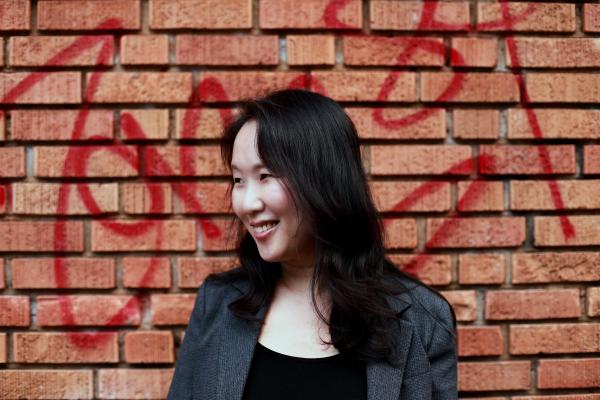
Jinwon Kim, Smith College

Please note: This lecture will be held in person and virtually on Zoom. If you would like to attend via Zoom, registration is required. Once you've registered, joining information will be sent to your email. Register for the Zoom webinar at: https://myumi.ch/8JNPb
Synopsis:
In the past decade, Korean entertainment has gained global recognition, with Korean movies and TV shows winning Oscars and Emmys, and K-Pop groups becoming wildly popular. In Manhattan, Koreatown has become a popular destination for both locals and tourists, drawing them in with its bars, restaurants, and day spas. Jinwon Kim argues that Manhattan’s Koreatown has become a new type of ethnic enclave, what she dubs a “transclave.” This commercialized ethnic space exists solely for consumption, leisure, and entertainment, and has been shaped by South Korea’s nation-branding strategy, new economic and cultural strategies, patterns in Korean migration, and shifts in tourism and urban policies in New York City. Kim posits that for many consumers in Koreatown, especially those who are not of Korean descent, the space has become a commercialized place where transnational culture meets the diverse racial and ethnic mosaic of New York City. Kim emphasizes how the space functions to “brand Korea” as a space to “consume ethnicity,” reflecting the landscape of South Korea’s consumer culture through the physical appearance of buildings and stores and the inclusion of franchise brands. In this talk, Kim explores the recent popularity of Korean food in New York City by focusing on both transnational and domestic factors, leading to the new trend of commercialization of ethnic food, emphasis on authenticity, and rise of the omnivore society, by delivering the voices of ordinary people. While Koreatown’s authenticity has been largely defined by commercialized ethnic cuisine by local entrepreneurs, the Korean government, and franchises, Kim argues that Koreatown’s authenticity has represented the collective imaginations and narratives of various consumer groups–Korean nationals, Korean Americans, and non-Koreans.
Speaker Bio:
Jinwon Kim is assistant professor of sociology at Smith College. An urban sociologist and Asian Americanist, her research and teaching focus on race and ethnicity, transnational sociology, immigration, consumption, and qualitative research methods. Prior to her appointment at Smith College, she was a tenure-track assistant professor at the New York City College of Technology/CUNY (2019–2024). Her peer-reviewed scholarship has appeared in journals such as City & Community and The International Journal of Cultural Policy, and she is the co-editor of the volume Koreatowns: Exploring the Economics, Politics, and Identities of Korean Spatial Formations (2020). Kim is currently working on two book-length projects that investigate transnational culture and urban transformation. The first, New Trends, Old Conflicts: New Black-Korean Relations in an Era of Global Racism and Global Media, draws on 280 international interviews to examine anti-Blackness and interracial dynamics within the Korean entertainment industry, situating these conflicts within East Asian geopolitics. Her second project, The Asian Times Square: Gentrification, Displacement, and New Ethnic Placemaking in Flushing, NY, examines how waterfront megaprojects, transnational investments, and gentrification drive the physical and symbolic displacement of working-class East Asian immigrant families and small businesses. It also explores how these processes reshape inter/intraethnic relations among four East Asian groups—Koreans, Korean Chinese, Chinese, and Taiwanese—in Flushing, New York City.
If there is anything we can do to make this event accessible to you, please contact us at [email protected]. Please be aware that advance notice is necessary as some accommodations may require more time for the university to arrange.
Synopsis:
In the past decade, Korean entertainment has gained global recognition, with Korean movies and TV shows winning Oscars and Emmys, and K-Pop groups becoming wildly popular. In Manhattan, Koreatown has become a popular destination for both locals and tourists, drawing them in with its bars, restaurants, and day spas. Jinwon Kim argues that Manhattan’s Koreatown has become a new type of ethnic enclave, what she dubs a “transclave.” This commercialized ethnic space exists solely for consumption, leisure, and entertainment, and has been shaped by South Korea’s nation-branding strategy, new economic and cultural strategies, patterns in Korean migration, and shifts in tourism and urban policies in New York City. Kim posits that for many consumers in Koreatown, especially those who are not of Korean descent, the space has become a commercialized place where transnational culture meets the diverse racial and ethnic mosaic of New York City. Kim emphasizes how the space functions to “brand Korea” as a space to “consume ethnicity,” reflecting the landscape of South Korea’s consumer culture through the physical appearance of buildings and stores and the inclusion of franchise brands. In this talk, Kim explores the recent popularity of Korean food in New York City by focusing on both transnational and domestic factors, leading to the new trend of commercialization of ethnic food, emphasis on authenticity, and rise of the omnivore society, by delivering the voices of ordinary people. While Koreatown’s authenticity has been largely defined by commercialized ethnic cuisine by local entrepreneurs, the Korean government, and franchises, Kim argues that Koreatown’s authenticity has represented the collective imaginations and narratives of various consumer groups–Korean nationals, Korean Americans, and non-Koreans.
Speaker Bio:
Jinwon Kim is assistant professor of sociology at Smith College. An urban sociologist and Asian Americanist, her research and teaching focus on race and ethnicity, transnational sociology, immigration, consumption, and qualitative research methods. Prior to her appointment at Smith College, she was a tenure-track assistant professor at the New York City College of Technology/CUNY (2019–2024). Her peer-reviewed scholarship has appeared in journals such as City & Community and The International Journal of Cultural Policy, and she is the co-editor of the volume Koreatowns: Exploring the Economics, Politics, and Identities of Korean Spatial Formations (2020). Kim is currently working on two book-length projects that investigate transnational culture and urban transformation. The first, New Trends, Old Conflicts: New Black-Korean Relations in an Era of Global Racism and Global Media, draws on 280 international interviews to examine anti-Blackness and interracial dynamics within the Korean entertainment industry, situating these conflicts within East Asian geopolitics. Her second project, The Asian Times Square: Gentrification, Displacement, and New Ethnic Placemaking in Flushing, NY, examines how waterfront megaprojects, transnational investments, and gentrification drive the physical and symbolic displacement of working-class East Asian immigrant families and small businesses. It also explores how these processes reshape inter/intraethnic relations among four East Asian groups—Koreans, Korean Chinese, Chinese, and Taiwanese—in Flushing, New York City.
If there is anything we can do to make this event accessible to you, please contact us at [email protected]. Please be aware that advance notice is necessary as some accommodations may require more time for the university to arrange.
Related Links

Explore Similar Events
-
Loading Similar Events...
