Presented By: Applied Physics
Applied Physics | From Solar Eruptions to Radiation Forecasts: Plasma Physics with CLEAR and SOFIE
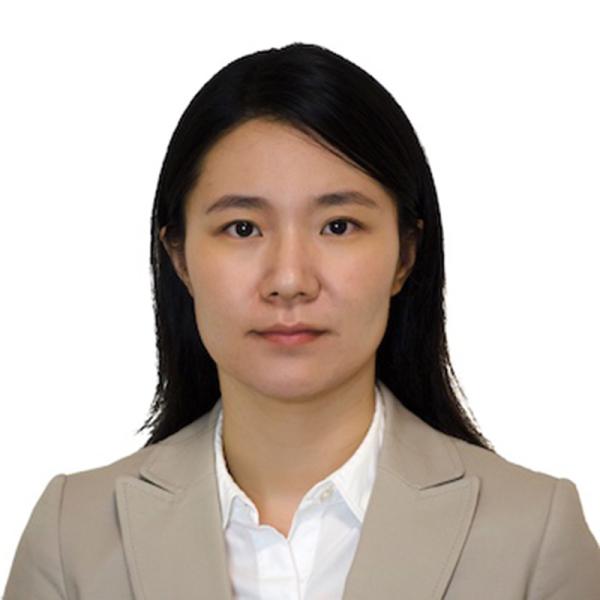
Lulu Zhao, Assistant Professor, Department of Climate and Space Sciences and Engineering, University of Michigan

How can we predict the radiation environment in space before it threatens astronauts and spacecraft? Solar eruptions can accelerate charged particles to nearly the speed of light, creating solar energetic particle (SEP) events that pose a major challenge for space exploration. Predicting these events requires connecting processes across vastly different scales, from particle acceleration at shocks to transport through the Sun’s evolving magnetic environment.
In this talk, I will introduce the Center for All-Clear Solar Energetic Particle Forecasts (CLEAR), a NASA Space Weather Center of Excellence developing an integrated framework to predict both hazardous SEP events and periods of low radiation risk. I will focus on SOFIE, the Solar Wind with Field Lines and Energetic Particles modeling framework, which connects simulations of the solar wind, coronal mass ejections, shock acceleration, and energetic particle transport. Through examples, I will discuss how magnetic connectivity and the evolving solar-wind environment shape the particle intensities and energy spectra experienced at different locations in space. I will also explore the challenges of turning physical understanding into reliable forecasts, including limited observations, uncertain model inputs, and validation against spacecraft measurements. The talk will highlight how fundamental plasma physics and computational modeling come together to support human exploration of the Moon and Mars.
In this talk, I will introduce the Center for All-Clear Solar Energetic Particle Forecasts (CLEAR), a NASA Space Weather Center of Excellence developing an integrated framework to predict both hazardous SEP events and periods of low radiation risk. I will focus on SOFIE, the Solar Wind with Field Lines and Energetic Particles modeling framework, which connects simulations of the solar wind, coronal mass ejections, shock acceleration, and energetic particle transport. Through examples, I will discuss how magnetic connectivity and the evolving solar-wind environment shape the particle intensities and energy spectra experienced at different locations in space. I will also explore the challenges of turning physical understanding into reliable forecasts, including limited observations, uncertain model inputs, and validation against spacecraft measurements. The talk will highlight how fundamental plasma physics and computational modeling come together to support human exploration of the Moon and Mars.

Explore Similar Events
-
Loading Similar Events...
