Presented By: Computer Science and Engineering (CSE) Division
Nothing Without Us: A Messy Path to Youth-Governed Programmable Media
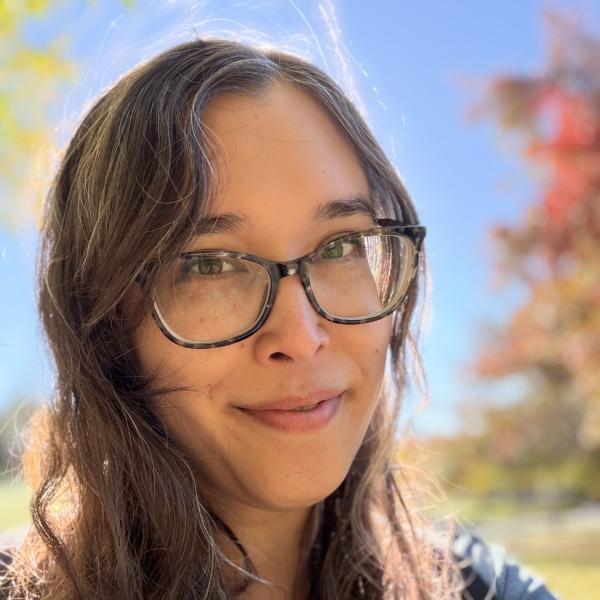
Amy J. Ko

This is a hybrid in-person/remote event. Zoom link for remote attendance: https://umich.zoom.us/j/98784211378?pwd=wsTRehTTNgggSbXgfYPyjEnAhfEbvI.1
For in-person attendees, a reception with refreshments will follow the lecture at 4:30 on the third floor of the Beyster Building.
ABSTRACT: For most of the history of computing, computer scientists and software engineers have been in charge of what computing the world uses. Even human-computer interaction, a field that starts from the premise that technologists often do not know what people want or need, has positioned designers as the deciders, on behalf of the world. And yet, for decades, scholars, activists, and democracies have shown that the only way to build futures that work for everyone is to involve everyone. What happens when we try to transfer power away from computer scientists to stakeholders, especially when the ability to create software appears to be rapidly democratizing? I report on five years of trying (and often failing) to share power in the specific domain of educational programming language design with middle schoolers and their teachers. Across interactions with hundreds of youth and young adults, spanning a wide range of abilities, natural language fluencies, races, ethnicities, cultures, genders, and human values, I share the joint design decisions we have made, the surprising innovations and discoveries that emerged from them, and the many open questions we’ve found on how to jointly shape the future of computing. I also reflect on the challenges of creating models for youth governance that balance computer science expertise with the unrestrained creativity of youth and declining public support for such research.
BIO: Amy J. Ko is a Professor at the University of Washington Information School with courtesy appointments in the Paul G. Allen School of Computer Science and Engineering and the College of Education (courtesy). She co-directs the UW Center for Learning, Computing, and Imagination, where she studies computing education, human-computer interaction, software engineering, and humanity's individual and collective struggle to equitably use or resist computing for equity, justice, and liberation. With her collaborators, she's invented programming languages and tools to support debugging, program understanding, reuse, and learning; founded and sold a venture-backed startup focused on software troubleshooting; developed numerous ways to weave equity and justice into computing education pedagogy, culture, and technology; and impacted local, state, and federal K-12 CS education policy through community organizing and advocacy. Her work spans more than 160 peer-reviewed publications, with 24 receiving distinguished paper awards and 6 receiving most influential paper awards. She is an ACM Distinguished Member and a member of the SIGCHI Academy for her substantial contributions to the field of human-computer interaction, computing education, and software engineering. She received her Ph.D. at the Human-Computer Interaction Institute at Carnegie Mellon University in 2008, and degrees in Computer Science and Psychology with Honors from Oregon State University in 2002.
Related Links

Explore Similar Events
-
Loading Similar Events...
