Presented By: Computer Science and Engineering (CSE) Division
AI That Meets Us Where We Are
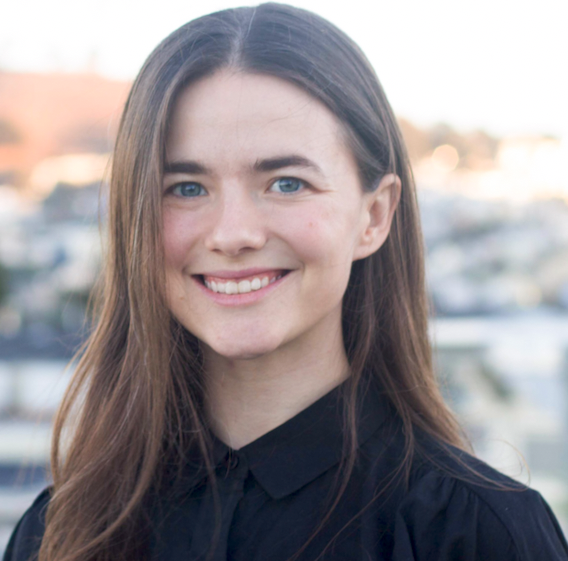
Amy Pavel

This event will be hybrid in-person/remote. To attend by Zoom, use this link: https://myumi.ch/6PmM6
Abstract: Technology can help us live more fully — to get better at what we enjoy and spend more time on what we care about. AI optimists promise this future. But today’s AI systems often fail to align with human capabilities. When they teach us, they give instructions that are hard to follow or generalize. When they act on their own, they output text and actions in a way that we cannot keep up with or understand. Such mismatches can be particularly acute for people with disabilities. In this talk, I’ll share work from my lab on building AI systems that work with people: systems that teach people long-term skills (e.g., an AI coach that turns how-to videos into in-situ guidance), and systems that help people oversee AI (e.g., computer use agents, robots). We begin by designing with disabled people, as we aim to build AI systems that work for a range of human capabilities from the start. I’ll conclude with barriers and opportunities for building AI that meets us where we are and helps us live better lives.
Bio: Amy Pavel is an Assistant Professor in EECS at UC Berkeley, where she works on human-computer interaction, accessibility, and human-AI interaction. She has received best paper and honorable mention awards at UIST, CHI, and ASSETS, as well as a Google ML and Systems Junior Faculty Award. Her research has informed features in widely used products. Previously, she was an Assistant Professor at UT Austin, a Visiting Faculty Researcher at Google Research, a Research Scientist at Apple, and a postdoctoral fellow at Carnegie Mellon.

Explore Similar Events
-
Loading Similar Events...
