Presented By: History of Art
Under the Marquee: Imperial Tents and Ceremonial during the Reign of Sultan Reşad
Tappan Talk by Ashley Dimmig

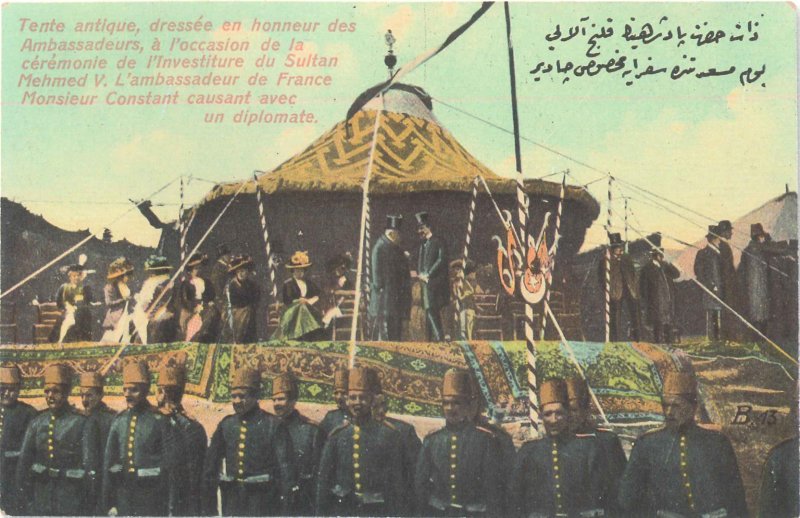
This talk examines the roles played by imperial tents during the reign of the Ottoman sultan Mehmed V, also known as Reşad (r. 1909-1918). For centuries, appliquéd and embroidered fabric edifices marked special occasions in Ottoman lands. They served to promote the power and might of the empire for local and international audiences alike. During the 19th century, the imperial tent also was erected on occasions heralding the state’s various modernization efforts and reforms, such as the opening of new railways. With the reinstatement of a constitutional monarchy upon the coronation of Reşad, however, this age-old symbol of Ottoman kingship acquired new valences of meaning. Alongside the founding of the Imperial Museum and display of dynastic garments and other historical artifacts, the imperial tent pointed to the dynasty’s nomadic origins, thereby helping to construct the notion of Ottomanness. Imperial fabric architecture thus recalled the past and announced a new future, at a time when the empire sought to redefine itself as a modern imperial polity rooted in and bolstered by tradition.
Related Links

Explore Similar Events
-
Loading Similar Events...
