Presented By: Applied Physics
Applied Physics Seminar: "Can Physical Processes in Climate Models be Emulated via Machine Learning Approaches?"
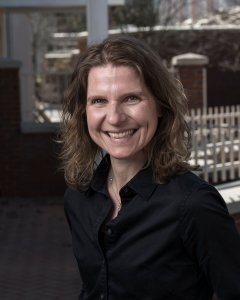
Christiane Jablonowski (and Garrett Limon), Associate Professor of Climate and Space Sciences and Engineering, College of Engineering, University of Michigan

Abstract: Over the past few years the science community has witnessed a Machine Learning (ML) & data science revolution. ML techniques now serve as feature detection tools, they support decision makers, or act as informed agents. This raises the question whether and how ML techniques are also suitable for the physical sciences which adhere to strict physical principles, like conservation laws. The talk will first provide a brief overview of the ML landscape, and then explore this question for the climate sciences. In particular, the talk explores whether a selection of ML techniques can serve as emulators of physical processes in climate models, and what the pros and cons of the different ML approaches are. We test the ML emulators in a simplified dry and moist model hierarchy with the Community Atmosphere Model version 6 (CAM6). The latter is the atmospheric component of the Community Earth System Model version 2.1 (CESM2.1) developed at the National Center for Atmospheric Research (NCAR). Several machine learning techniques are developed, trained, and tested offline using CAM6 output data. These include linear regression, random forests, and deep learning architectures. We discuss how well the ML methods can reproduce the physical forcing mechanisms and physical fields like the precipitation rates, and highlight the need for physics-informed ML methods.
Bio:
Christiane Jablonowski is an Associate Professor in the Department of Climate and Space Sciences and Engineering at the University of Michigan, and the head of the Atmospheric Dynamics Modeling Group. She received her M.S. in Meteorology from the University of Bonn, Germany, and obtained her Ph.D. in Atmospheric Science and Scientific Computing from the University of Michigan. She was a postdoctoral scientist at the National Center for Atmospheric Research (NCAR) and NOAA's Geophysical Fluid Dynamics Laboratory, and worked as a consultant at the European Centre for Medium-Range Weather Forecasts (ECMWF) in Reading, U.K..
Dr. Jablonowski’s research lies at the interface between atmospheric fluid dynamics, scientific computing and machine learning. In particular, her work focuses on the dynamical cores of weather and climate models, and how they couple to physical parameterizations. Dr. Jablonowski is the recipient of a Department of Energy Early Career Award and the Presidential Early Career Award for Scientists and Engineers (PECASE). She is a member of the Steering Committee for NCAR’s Community Earth System Model (CESM), a co-chair of the NCAR/CESM Atmospheric Model Working Group (AMWG), and a co-chair of the NOAA 'Coupled Model' Development Group for the Unified Forecast System (UFS). In addition, she is a member of the Committee on Artificial Intelligence Applications to Environmental Science of the American Meteorological Society (AMS).
Bio:
Christiane Jablonowski is an Associate Professor in the Department of Climate and Space Sciences and Engineering at the University of Michigan, and the head of the Atmospheric Dynamics Modeling Group. She received her M.S. in Meteorology from the University of Bonn, Germany, and obtained her Ph.D. in Atmospheric Science and Scientific Computing from the University of Michigan. She was a postdoctoral scientist at the National Center for Atmospheric Research (NCAR) and NOAA's Geophysical Fluid Dynamics Laboratory, and worked as a consultant at the European Centre for Medium-Range Weather Forecasts (ECMWF) in Reading, U.K..
Dr. Jablonowski’s research lies at the interface between atmospheric fluid dynamics, scientific computing and machine learning. In particular, her work focuses on the dynamical cores of weather and climate models, and how they couple to physical parameterizations. Dr. Jablonowski is the recipient of a Department of Energy Early Career Award and the Presidential Early Career Award for Scientists and Engineers (PECASE). She is a member of the Steering Committee for NCAR’s Community Earth System Model (CESM), a co-chair of the NCAR/CESM Atmospheric Model Working Group (AMWG), and a co-chair of the NOAA 'Coupled Model' Development Group for the Unified Forecast System (UFS). In addition, she is a member of the Committee on Artificial Intelligence Applications to Environmental Science of the American Meteorological Society (AMS).

Livestream Information
LivestreamFebruary 17, 2021 (Wednesday) 12:00pm
Joining Information Not Yet Available
Explore Similar Events
-
Loading Similar Events...
