Presented By: Eisenberg Institute for Historical Studies
EIHS Workshop: Transpolitics of Postcolonial Orders
Vishesh Chander Guru, Shane Niesen, Leela Riesz, Clayton Van Woerkom, Yasmin Moll (moderator)
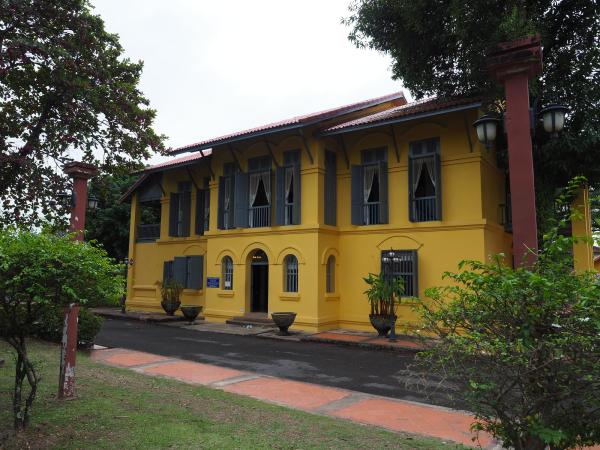

Colonial power does not simply disappear at independence. It mutates, reappearing through contemporary institutions, political discourses, and racial hierarchies, complicating any clean break between colonial and postcolonial eras. Ann Laura Stoler’s concept of duress captures this ongoing condition: colonial power persists as a lived, material, and affective force, embedded in social life even when presumed to be over.
Racialized and minoritized communities actively confront and reshape these postcolonial conditions. In France, for example, immigrant communities and descendants of colonial subjects engage in memory-work, cultural production, and political mobilization to challenge assimilationist ideologies, securitized Islamophobia, and exclusionary myths of national universalism. These interventions contest dominant narratives of belonging and insist on political futures that reckon with imperial histories rather than disavow them.
Join us for a panel that examines how postcolonial orders are inhabited, contested, and reimagined across diverse contexts.
This event presented by the Eisenberg Institute for Historical Studies. It is made possible in part by a generous contribution from Kenneth and Frances Aftel Eisenberg.
Racialized and minoritized communities actively confront and reshape these postcolonial conditions. In France, for example, immigrant communities and descendants of colonial subjects engage in memory-work, cultural production, and political mobilization to challenge assimilationist ideologies, securitized Islamophobia, and exclusionary myths of national universalism. These interventions contest dominant narratives of belonging and insist on political futures that reckon with imperial histories rather than disavow them.
Join us for a panel that examines how postcolonial orders are inhabited, contested, and reimagined across diverse contexts.
This event presented by the Eisenberg Institute for Historical Studies. It is made possible in part by a generous contribution from Kenneth and Frances Aftel Eisenberg.
Co-Sponsored By

Explore Similar Events
-
Loading Similar Events...
