Presented By: Museum of Anthropological Archaeology
AMS Ages on Adhered Carbonized Food Residues from Ceramic Vessel Interior Walls: Retrospective and Current Research Directions
William Lovis, Professor Emeritus and Curator Emeritus, Michigan State University
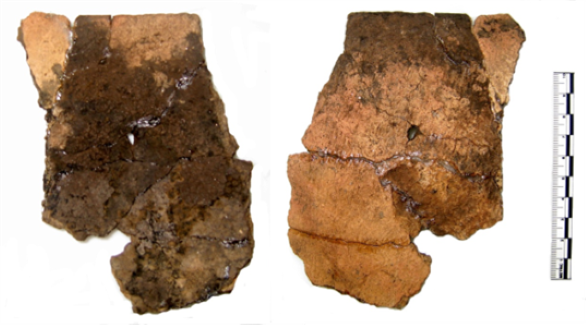

This collaborative overview of the use of adhered carbonized food residues, sometimes referred to as “food crusts”, will attempt to achieve several goals. First, we will provide a personalized historical backdrop to the early applications of Accelerator Mass Spectrometer (AMS) dating to carbonized cooking residues on the interior walls of ceramic vessels. This historical framework will also introduce early examinations of the taphonomy of such residues, as well as the various skepticisms that arose about the accuracy of resulting AMS ages. Second, among the acknowledged benefits of this relatively new approach was recognition that such ages were direct dates on one or a series of cooking behaviors, rather than an age on datable materials in near, or not so near, physical association with objects of interest. This benefit was often initially focused on chronology building. Subsequent research extended to questions about the freshwater reservoir effect and offsets and evaluation of stable isotope content particularly with respect to the presence of maize/ The latter included analysis of plant microfossils. Finally, we present current collaborative residue research, including questions regarding the effects of different pretreatments to samples, the statistical consistency of multiple age assays, and age variations in the interior wall locations from which samples derive. The latter will employ Upper Great Lakes examples for illustration.

Explore Similar Events
-
Loading Similar Events...
