Presented By: School of Music, Theatre & Dance (SMTD)
Carrigan Lecture in Music Theory by Antares Boyle
“An Ambiguity of Harmony and Narrative”: Pitch Structuring Techniques in the Music of Linda Catlin Smith

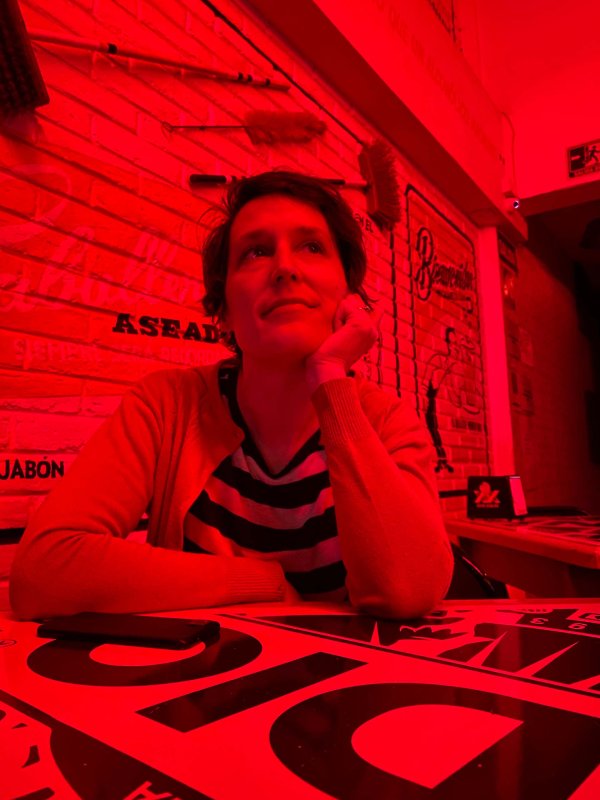
The Department of Music Theory presents a talk by guest scholar Antares (Tara) Boyle as part of the Carrigan Lecture Series. Boyle's abstract:
The music of Canadian composer Linda Catlin Smith (b. 1957) has garnered increasing critical acclaim and public recognition over the past few decades. Smith’s music is sometimes compared to that of Morton Feldman, American minimalists, or the Wandelweiser Collective, but one feature distinguishing her style from these touchstones is her varied and often lush harmonic language. Smith writes that she is “drawn to an ambiguity of harmony and narrative.” Based on an extensive survey of her works, I describe features of Smith’s pitch structuring practices that support this ambiguity and consider how they have informed reception of her works. I show that Smith’s compositions often feature stable or gradually shifting macroharmonies (Tymoczko 2011) of seven to nine pitch classes. Her preferred collections include not only the diatonic, but modes of the acoustic scale and collections that add one or two pcs to these seven-note collections – macroharmonies that allow for quasi-diatonic chords and scale fragments without suggesting a typical major/minor tonality. I show how Smith often enhances the ambiguity of her novel tonalities by avoiding centricity, clear bass lines, or overtly tertian chords, and demonstrate how subtle macroharmonic change structures larger form in certain works. At the local level, Smith’s chords often relate by techniques of common-tone preservation, fuzzy transposition/inversion (Quinn 2001), subset recombination, or what I term “split transposition,” while larger passages may be structured by strategic chord repetition. All of these techniques broadly allow for subtle exploratory variation without strong teleologic arcs or tension/release dynamics, an “ambiguity of narrative” that may partially explain Smith’s reception as minimalism- or Wandelweiser-adjacent.
GUEST BIO
ANTARES (TARA) BOYLE is Associate Professor of Music Theory at Portland State University. Her research on modernist, experimental, and improvised music has touched on European post-serial composers Salvatore Sciarrino and Harrison Birtwistle, American jazz pioneers Wayne Shorter and Craig Taborn, and contemporary multimedia performer Matana Roberts. Tara’s work has been published in the journals Music Theory Spectrum, Journal of Music Theory, Perspectives of New Music, and Music Theory Online, and is forthcoming in two edited volumes. Her scholarship has been awarded the Society for Music Theory’s Emerging Scholar Award, the publication awards of the SMT Interest Groups in Jazz and Post-1945 Music Analysis, and the SMT-40 Dissertation Fellowship.
The music of Canadian composer Linda Catlin Smith (b. 1957) has garnered increasing critical acclaim and public recognition over the past few decades. Smith’s music is sometimes compared to that of Morton Feldman, American minimalists, or the Wandelweiser Collective, but one feature distinguishing her style from these touchstones is her varied and often lush harmonic language. Smith writes that she is “drawn to an ambiguity of harmony and narrative.” Based on an extensive survey of her works, I describe features of Smith’s pitch structuring practices that support this ambiguity and consider how they have informed reception of her works. I show that Smith’s compositions often feature stable or gradually shifting macroharmonies (Tymoczko 2011) of seven to nine pitch classes. Her preferred collections include not only the diatonic, but modes of the acoustic scale and collections that add one or two pcs to these seven-note collections – macroharmonies that allow for quasi-diatonic chords and scale fragments without suggesting a typical major/minor tonality. I show how Smith often enhances the ambiguity of her novel tonalities by avoiding centricity, clear bass lines, or overtly tertian chords, and demonstrate how subtle macroharmonic change structures larger form in certain works. At the local level, Smith’s chords often relate by techniques of common-tone preservation, fuzzy transposition/inversion (Quinn 2001), subset recombination, or what I term “split transposition,” while larger passages may be structured by strategic chord repetition. All of these techniques broadly allow for subtle exploratory variation without strong teleologic arcs or tension/release dynamics, an “ambiguity of narrative” that may partially explain Smith’s reception as minimalism- or Wandelweiser-adjacent.
GUEST BIO
ANTARES (TARA) BOYLE is Associate Professor of Music Theory at Portland State University. Her research on modernist, experimental, and improvised music has touched on European post-serial composers Salvatore Sciarrino and Harrison Birtwistle, American jazz pioneers Wayne Shorter and Craig Taborn, and contemporary multimedia performer Matana Roberts. Tara’s work has been published in the journals Music Theory Spectrum, Journal of Music Theory, Perspectives of New Music, and Music Theory Online, and is forthcoming in two edited volumes. Her scholarship has been awarded the Society for Music Theory’s Emerging Scholar Award, the publication awards of the SMT Interest Groups in Jazz and Post-1945 Music Analysis, and the SMT-40 Dissertation Fellowship.
Cost
- Free - no tickets required

Explore Similar Events
-
Loading Similar Events...
