Presented By: University Library
The Greek Manuscripts of the University of Michigan: A Celebration of the Collection and Its Catalogue
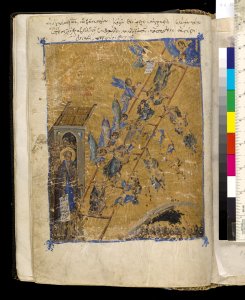

Join us to celebrate the culmination of a decade-and-a-half-long project to fully catalog the University of Michigan Library’s extraordinary collection of Greek manuscripts.
A Catalogue of Greek Manuscripts, Volume 2 (https://myumi.ch/NXVQr), published by U-M Press, brings this monumental undertaking to a close, making one of the most extensive collections of Greek manuscripts in North America accessible to scholars around the world.
Enjoy breakfast refreshments while three scholars offer complementary perspectives on the study of Greek manuscripts:
THE MAKING OF A CATALOGUE OF GREEK MANUSCRIPTS AT THE UNIVERSITY OF MICHIGAN: CHALLENGES, ACHIEVEMENT, AND DISCOVERIES with Nadezhda Kavrus-Hoffmann, cataloger of U-M’s Greek manuscript collection.
Volume 2 covers eighty-four manuscripts and fragments. Overall, these manuscripts span a thousand years of history, from the ninth to the nineteenth century, and include a wide range of subjects, from Bible texts and saints' lives to church music and secular writing.
Learn about the detective work behind the project, including three especially exciting finds: a small fragment that turned out to preserve lost portions of a medieval Byzantine text on Indian mathematics; a beautifully illuminated fourteenth-century manuscript paired with poetry written specifically for it; and a manuscript that may be traced back to the personal library of a nineteenth-century monk-scholar, opening a new mystery about how it came to Michigan.
THE PRINCESS AND THE PHILOSOPHER: ANNA COMNENA AND THE MANUSCRIPTS OF ARISTOTLE'S "ETHICS" with Richard Janko, professor of Greek in the Department of Classical Studies, who has drawn on the collection for teaching and research.
The Byzantine historian and would-be empress Anna Comnena, confined for life to a nunnery in Constantinople after trying to depose her imperial brother, was a passionate philosopher. Beginning in 1118 C.E. she organized a scholarly edition of Aristotle's "Nicomachean Ethics" and induced three other scholars to write commentaries on it. Several remarkable paper manuscripts, now precisely datable because they belong to her project, reflect this effort. They show how her team evolved useful conventions like the comma and the footnote-number, and worked with Italian scholars to create the earliest translation of this work into Latin.
ALWAYS INTERESTING: SELECTED BINDINGS FROM THE UM GREEK MANUSCRIPT COLLECTION with Julia Miller, bookbinding historian and contributor to the catalogue.
Miller will focus on a selection of bindings, looking at their structure, materials, and decoration — chosen based on gorgeous images in the catalogue of bindings ranging from small and exquisite, Mich. Ms. 68 (15th century), and larger but equally beautiful, Mich. Ms. 172 (14th century), both in their original and completely traditional Greek bindings, to the fascinating layers of repair and rebinding represented by Mich. Ms. 76 (17th century).
A Catalogue of Greek Manuscripts, Volume 2 (https://myumi.ch/NXVQr), published by U-M Press, brings this monumental undertaking to a close, making one of the most extensive collections of Greek manuscripts in North America accessible to scholars around the world.
Enjoy breakfast refreshments while three scholars offer complementary perspectives on the study of Greek manuscripts:
THE MAKING OF A CATALOGUE OF GREEK MANUSCRIPTS AT THE UNIVERSITY OF MICHIGAN: CHALLENGES, ACHIEVEMENT, AND DISCOVERIES with Nadezhda Kavrus-Hoffmann, cataloger of U-M’s Greek manuscript collection.
Volume 2 covers eighty-four manuscripts and fragments. Overall, these manuscripts span a thousand years of history, from the ninth to the nineteenth century, and include a wide range of subjects, from Bible texts and saints' lives to church music and secular writing.
Learn about the detective work behind the project, including three especially exciting finds: a small fragment that turned out to preserve lost portions of a medieval Byzantine text on Indian mathematics; a beautifully illuminated fourteenth-century manuscript paired with poetry written specifically for it; and a manuscript that may be traced back to the personal library of a nineteenth-century monk-scholar, opening a new mystery about how it came to Michigan.
THE PRINCESS AND THE PHILOSOPHER: ANNA COMNENA AND THE MANUSCRIPTS OF ARISTOTLE'S "ETHICS" with Richard Janko, professor of Greek in the Department of Classical Studies, who has drawn on the collection for teaching and research.
The Byzantine historian and would-be empress Anna Comnena, confined for life to a nunnery in Constantinople after trying to depose her imperial brother, was a passionate philosopher. Beginning in 1118 C.E. she organized a scholarly edition of Aristotle's "Nicomachean Ethics" and induced three other scholars to write commentaries on it. Several remarkable paper manuscripts, now precisely datable because they belong to her project, reflect this effort. They show how her team evolved useful conventions like the comma and the footnote-number, and worked with Italian scholars to create the earliest translation of this work into Latin.
ALWAYS INTERESTING: SELECTED BINDINGS FROM THE UM GREEK MANUSCRIPT COLLECTION with Julia Miller, bookbinding historian and contributor to the catalogue.
Miller will focus on a selection of bindings, looking at their structure, materials, and decoration — chosen based on gorgeous images in the catalogue of bindings ranging from small and exquisite, Mich. Ms. 68 (15th century), and larger but equally beautiful, Mich. Ms. 172 (14th century), both in their original and completely traditional Greek bindings, to the fascinating layers of repair and rebinding represented by Mich. Ms. 76 (17th century).
Related Links
Co-Sponsored By

Explore Similar Events
-
Loading Similar Events...
