Presented By: Science, Technology and Society
Japanese Medical Aid, Iranian Blood, and the Diplomacy of Genetic Racialism
Elise Burton, University of Toronto

In 1966, Japan’s Overseas Technical Cooperation Agency (OTCA) established an office for “medical cooperation,” which recruited Japanese medical schools to participate in international aid projects to strengthen scientific, as well as political, ties with countries across Asia and Africa. Gifu University Medical School was selected to work in Iran, launching a flow of Japanese personnel and scientific equipment to the laboratories of Tehran University. While Iranian scientists were primarily interested in receiving technical aid, Japanese scientists were eager to conduct joint fieldwork projects. The organization of a joint expedition to northern Iran in 1972 exposed a series of tensions in the Japanese-Iranian collaboration. The team eventually collected blood samples from thousands of Iranian villagers to screen them for pathologies. Then, most of these blood samples were shipped to Japan, where they had a surprising afterlife. Circulating through laboratories in Tokyo, Nagasaki, and Osaka, the Iranian blood was incorporated into a research project to analyze genetic variation within Japan’s own population, and data from the samples featured in Japanese publications hypothesizing about the origins of the Japanese race. Meanwhile, in publications with Iranian co-authors, the meaning of the genetic data had to be re-negotiated according to Iranian understandings of racial identity.
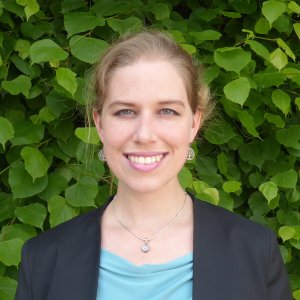
Elise K. Burton is an associate professor for the Institute of the History & Philosophy of Science & Technology at the University of Toronto. She is the author of Genetic Crossroads: The Middle East and the Science of Human Heredity (Stanford University Press, 2021). She is currently working on multiple projects examining the history of 20th-century scientific collaborations across Asia and the Middle East, including the history of Japanese archaeological and genetic expeditions in West Asia, the linked histories of physical anthropology in India and Iran, and the history of ancient DNA studies in Egypt. She is also one of the co-editors of Isis, the flagship journal of the History of Science Society.
Elise K. Burton is an associate professor for the Institute of the History & Philosophy of Science & Technology at the University of Toronto. She is the author of Genetic Crossroads: The Middle East and the Science of Human Heredity (Stanford University Press, 2021). She is currently working on multiple projects examining the history of 20th-century scientific collaborations across Asia and the Middle East, including the history of Japanese archaeological and genetic expeditions in West Asia, the linked histories of physical anthropology in India and Iran, and the history of ancient DNA studies in Egypt. She is also one of the co-editors of Isis, the flagship journal of the History of Science Society.
Co-Sponsored By

Explore Similar Events
-
Loading Similar Events...
