Presented By: University Library
Cutting Through Time: Folk Heritage and Socialist Vision in Chinese Papercuts
Third Thursdays at the Library
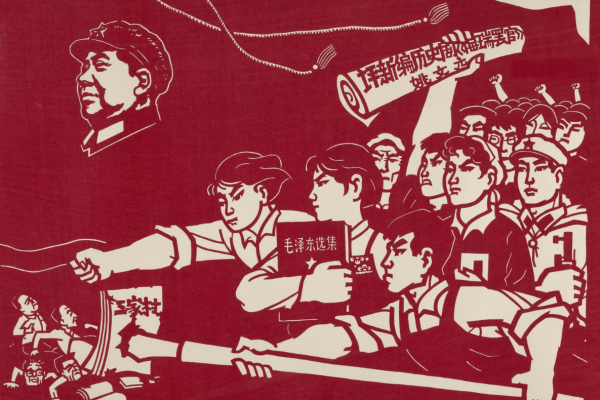

Deeply woven into the fabric of daily life, Chinese papercuts (jiǎnzhǐ 剪紙) have long marked domestic spaces and life-cycle rituals. This exhibit showcases the rich tapestry of regional styles, distinct cutting techniques, and enduring motifs preserved across generations. Drawn from several significant donations to the Asia Library, alongside our rich print collection on Chinese paper arts, we'll highlight both rare original artworks and publications that provide context for them.
Beyond traditional themes, our collections also reveal how papercutting transformed into a medium of political and social mobilization throughout the twentieth century. In the 1940s, artists at the revolutionary base in Yan’an adapted local paper arts to convey socialist ideals. Following the founding of the People's Republic of China in 1949, more and more art schools, local workshops, and professional artists were involved in the creation of papercuts, depicting collective labor, communist ideology, and industrial progress. During the Cultural Revolution (1966-1976), new papercuts largely illustrated political campaigns and eulogized party leaders. By the reform era of the 1980s, papercuts entered global markets as exported handicrafts and cultural ambassadors, marking yet another reinvention of a timeless folk tradition.
In 2009, Chinese papercutting was inscribed on UNESCO’s Representative List of the Intangible Cultural Heritage of Humanity, honoring centuries of technical virtuosity and communal creativity across China’s diverse regions and ethnic groups.
Third Thursdays at the Library is a themed monthly open house where we share materials from our collections. While you’re here, pick up a passport and collect a stamp from each of this month's Third Thursday locations — Asia Library, Clark Library, International Studies, and the Special Collections Research Center — to win a prize!
Beyond traditional themes, our collections also reveal how papercutting transformed into a medium of political and social mobilization throughout the twentieth century. In the 1940s, artists at the revolutionary base in Yan’an adapted local paper arts to convey socialist ideals. Following the founding of the People's Republic of China in 1949, more and more art schools, local workshops, and professional artists were involved in the creation of papercuts, depicting collective labor, communist ideology, and industrial progress. During the Cultural Revolution (1966-1976), new papercuts largely illustrated political campaigns and eulogized party leaders. By the reform era of the 1980s, papercuts entered global markets as exported handicrafts and cultural ambassadors, marking yet another reinvention of a timeless folk tradition.
In 2009, Chinese papercutting was inscribed on UNESCO’s Representative List of the Intangible Cultural Heritage of Humanity, honoring centuries of technical virtuosity and communal creativity across China’s diverse regions and ethnic groups.
Third Thursdays at the Library is a themed monthly open house where we share materials from our collections. While you’re here, pick up a passport and collect a stamp from each of this month's Third Thursday locations — Asia Library, Clark Library, International Studies, and the Special Collections Research Center — to win a prize!
Related Links

Explore Similar Events
-
Loading Similar Events...
