Presented By: Museum of Anthropological Archaeology
Foraging Household, Community and Cultural Identity Through Food: Comparing Viru (ca. 200 BCE-800 CE) Foodways at Domestic Structures in Puerto Malabrigo, Chicama Valley, Peru, Across Space and Time
Chloe Twu PhD Student, University of Michigan Department of Anthropology
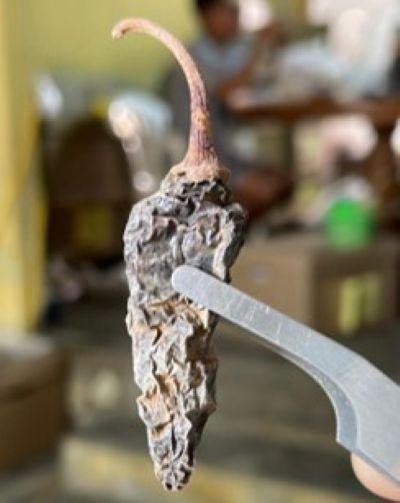

Households occupied by the Viru (ca. 200 BCE-800 CE), a key group in the emergence of statehood during the Early Intermediate Period (EIP) Andes, offer a glimpse into food’s role in the construction of group identity, society, and state expansion on the north coast of Peru. The Viru expanded north from their capital, in the Viru Valley, during the first century CE, constructing outposts in the Moche and Chicama valleys. The northernmost Viru site to date was identified in 2023 at Las Pampas, Puerto Malabrigo by Proyecto de Investigación Arqueológica de Puerto Malabrigo (PIAPM), co-directed by Peruvian archaeologist Aleksalia Isla Alayo and UCSD PhD candidate Arianna Garvin Suero. Sediment samples extracted from floors, above-floor fill, and features within floors and fill were collected and analyzed for organic remains, sorted, identified, and catalogued using macrobotanical techniques. This presentation investigates plant food remains found in samples from floors in two structures: areas 5 and 6. Chloe will discuss the results of her undergraduate honors thesis, encompassing spatial analysis between the households, comparing densities and frequencies of select crop, wild, and highland food taxa as connected to household and community-level identity formation, as well as temporal analysis between two distinct construction phases in each household and the implications for change in larger Viru cultural identity. Integrating these results with archaeobotanical studies from the Viru capital, this presentation will demonstrate the importance of food studies in representing how social changes within the Viru state reflect onto domestic settings.

Explore Similar Events
-
Loading Similar Events...
