Presented By: Classical Studies
2026 Thomas Spencer Jerome Lecture Series
Interchronological Roman History

Presented by Professor Edward Watts, the Alkiviadis Vassiliadis Endowed Chair and Distinguished Professor of History at UC San Diego, received his BA in Classics from Brown University in 1997 and his PhD in History from Yale University in 2002. His research centers on the intellectual, political, and religious history of the Roman Empire and the early Byzantine Empire. He is the author of seven books and the editor of five more, including The Final Pagan Generation (UC Press, 2015), Hypatia: The Life and Legend of an Ancient Philosopher, (Oxford University Press, 2017), Mortal Republic: How Rome Fell into Tyranny (Basic Books, 2018), and The Eternal Decline and Fall of Rome: The History of a Dangerous Idea (Oxford University Press, 2021). His most recent book, The Romans: A 2000 Year History (Basic Books, 2025), traces the history of the Roman state from the 8th century BC through 1204 AD. His work has also been featured in Time, Vox, Smithsonian, the Economist, the Wall Street Journal, the San Francisco Chronicle, British Museum Magazine, and the New York Times. Before coming to UCSD in 2012, Professor Watts taught for ten years at Indiana University. He teaches courses on Byzantine History, Roman History, Late Antique Christianity, Roman numismatics, and the history of the Medieval Mediterranean.
The Roman citizen body lived an almost inconceivably long life. Between the 8th century BC and the 15thcentury AD, nearly 100 generations of Romans superintended a political legacy they had inherited from their ancestors and handed down to their children. Nearly every element of Roman life changed during those two millennia. The state expanded from a hilltop settlement into a massive empire. Its center moved from Italy to Constantinople. Its dominant language changed from Latin to Greek. Its weaponry evolved from iron swords and bronze spears to Greek fire and gunpowder. It incorporated countless new gods before ultimately becoming Christian. And yet the thread linking the Roman present to its past never snapped. For all of their history, Romans used this past to help understand their world and determine the contours of its future. Tradition served as a governor on the pace of necessary change.
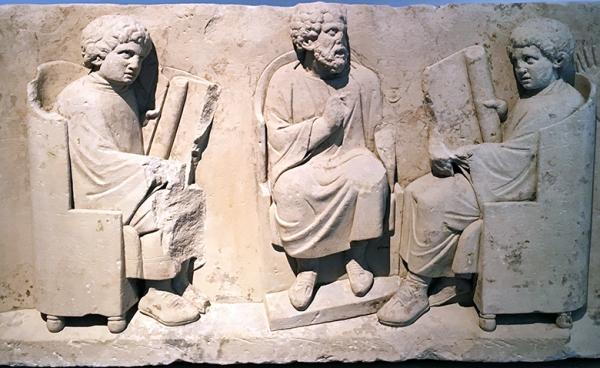
This Thomas Spencer Jerome lecture series introduces the idea of Roman interchronological history to explain how Romans found and maintained this balance between innovation and tradition. Interchronological history recognizes that Roman scholastic, social, familial, and religious traditions created situations in which Romans in the present spoke the words and felt the feelings of figures from the real or imagined past. These ancient situations encouraged people to connect personally and emotionally with figures from the past and made it natural to see in the past a set of frameworks that allowed one to both understand the present and imagine possible futures that might result from it.
These lectures explain how Roman educational, family, religious, and literary culture produced this way of interpreting the present and imagining the future through deep engagement with the past. They will then show how an interchronological approach to Roman history expands our understanding of everything from the political power of Roman women to the nature of Iconoclasm and the surprising durability of the Roman bond market. By their conclusion, the lectures will point to new ways to answer questions about the Roman past and suggest non-Roman contexts in which this historical method can also be applied.
Professor Watts will present four lectures and one seminar between March 9 and 19, 2026:
• What is Interchronological Roman History? Monday, March 9, 5:30 pm, Hussey Room, Michigan League
This lecture reconstructs an interchronological historical method based on how Romans were educated and socialized to connect with the words, experiences, and feelings of people in their shared past in a fashion that ensured their reactions in the moment and plans for the future remained connected to the traditions of the past.
• Interchronological History and the Political Power of Roman Women, Thursday, March 12, 5:30 pm, Hussey Room, Michigan League
Using an interchronological approach, this lecture shows how literature, public commemorations, and monuments encouraged Romans of both genders to recognize the political power of Roman women by speaking the words of female political exemplars, feeling their emotions, and understanding the circumstances surrounding their political interventions.
• Classical Studies Graduate Student Seminar: Containerization and the Creation of Interchronological Spaces in Imperial Rome, Friday, March 13, 12:00 pm
This seminar will look at how the creators and sponsors of a series of monuments in Rome curated space to generate an experience that joined the present in which the monument was unveiled with elements of the past to define a transition to a promised future. Using the theory of artistic containerization, we will see how each space was designed to showcase elements of the Roman past in a way that channeled specific themes important to both the present identity of the monument’s sponsor and a future they were promising to deliver.
• An Interchronological Approach to Roman Religion and Political History Monday, March 16, 5;30 pm, Vandenberg Room, Michigan League
This lecture explains how an interchronological history of Roman religion and politics can help us understand why this basic understanding of the role of the divine in shaping the tangible realities of Roman life persisted as Roman religion evolved from the practices of a small pagan city state into those of a large Christian empire.
• The Failures of Justin II and the Case for Interchronological Roman Macroeconomic History, Thursday, March 19, 5:30 pm, Hussey Room, Michigan League
This uses an interchronological comparative framework to reconstruct the institutional history of Roman finance and macroeconomics in order to explain how the sixth century emperor Justin II inadvertently crippled Rome's nearly 800-year-old financial system.
The Roman citizen body lived an almost inconceivably long life. Between the 8th century BC and the 15thcentury AD, nearly 100 generations of Romans superintended a political legacy they had inherited from their ancestors and handed down to their children. Nearly every element of Roman life changed during those two millennia. The state expanded from a hilltop settlement into a massive empire. Its center moved from Italy to Constantinople. Its dominant language changed from Latin to Greek. Its weaponry evolved from iron swords and bronze spears to Greek fire and gunpowder. It incorporated countless new gods before ultimately becoming Christian. And yet the thread linking the Roman present to its past never snapped. For all of their history, Romans used this past to help understand their world and determine the contours of its future. Tradition served as a governor on the pace of necessary change.
This Thomas Spencer Jerome lecture series introduces the idea of Roman interchronological history to explain how Romans found and maintained this balance between innovation and tradition. Interchronological history recognizes that Roman scholastic, social, familial, and religious traditions created situations in which Romans in the present spoke the words and felt the feelings of figures from the real or imagined past. These ancient situations encouraged people to connect personally and emotionally with figures from the past and made it natural to see in the past a set of frameworks that allowed one to both understand the present and imagine possible futures that might result from it.
These lectures explain how Roman educational, family, religious, and literary culture produced this way of interpreting the present and imagining the future through deep engagement with the past. They will then show how an interchronological approach to Roman history expands our understanding of everything from the political power of Roman women to the nature of Iconoclasm and the surprising durability of the Roman bond market. By their conclusion, the lectures will point to new ways to answer questions about the Roman past and suggest non-Roman contexts in which this historical method can also be applied.
Professor Watts will present four lectures and one seminar between March 9 and 19, 2026:
• What is Interchronological Roman History? Monday, March 9, 5:30 pm, Hussey Room, Michigan League
This lecture reconstructs an interchronological historical method based on how Romans were educated and socialized to connect with the words, experiences, and feelings of people in their shared past in a fashion that ensured their reactions in the moment and plans for the future remained connected to the traditions of the past.
• Interchronological History and the Political Power of Roman Women, Thursday, March 12, 5:30 pm, Hussey Room, Michigan League
Using an interchronological approach, this lecture shows how literature, public commemorations, and monuments encouraged Romans of both genders to recognize the political power of Roman women by speaking the words of female political exemplars, feeling their emotions, and understanding the circumstances surrounding their political interventions.
• Classical Studies Graduate Student Seminar: Containerization and the Creation of Interchronological Spaces in Imperial Rome, Friday, March 13, 12:00 pm
This seminar will look at how the creators and sponsors of a series of monuments in Rome curated space to generate an experience that joined the present in which the monument was unveiled with elements of the past to define a transition to a promised future. Using the theory of artistic containerization, we will see how each space was designed to showcase elements of the Roman past in a way that channeled specific themes important to both the present identity of the monument’s sponsor and a future they were promising to deliver.
• An Interchronological Approach to Roman Religion and Political History Monday, March 16, 5;30 pm, Vandenberg Room, Michigan League
This lecture explains how an interchronological history of Roman religion and politics can help us understand why this basic understanding of the role of the divine in shaping the tangible realities of Roman life persisted as Roman religion evolved from the practices of a small pagan city state into those of a large Christian empire.
• The Failures of Justin II and the Case for Interchronological Roman Macroeconomic History, Thursday, March 19, 5:30 pm, Hussey Room, Michigan League
This uses an interchronological comparative framework to reconstruct the institutional history of Roman finance and macroeconomics in order to explain how the sixth century emperor Justin II inadvertently crippled Rome's nearly 800-year-old financial system.
Related Links

Explore Similar Events
-
Loading Similar Events...
